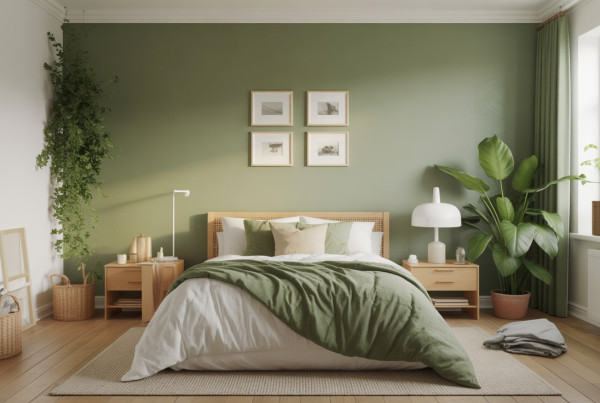
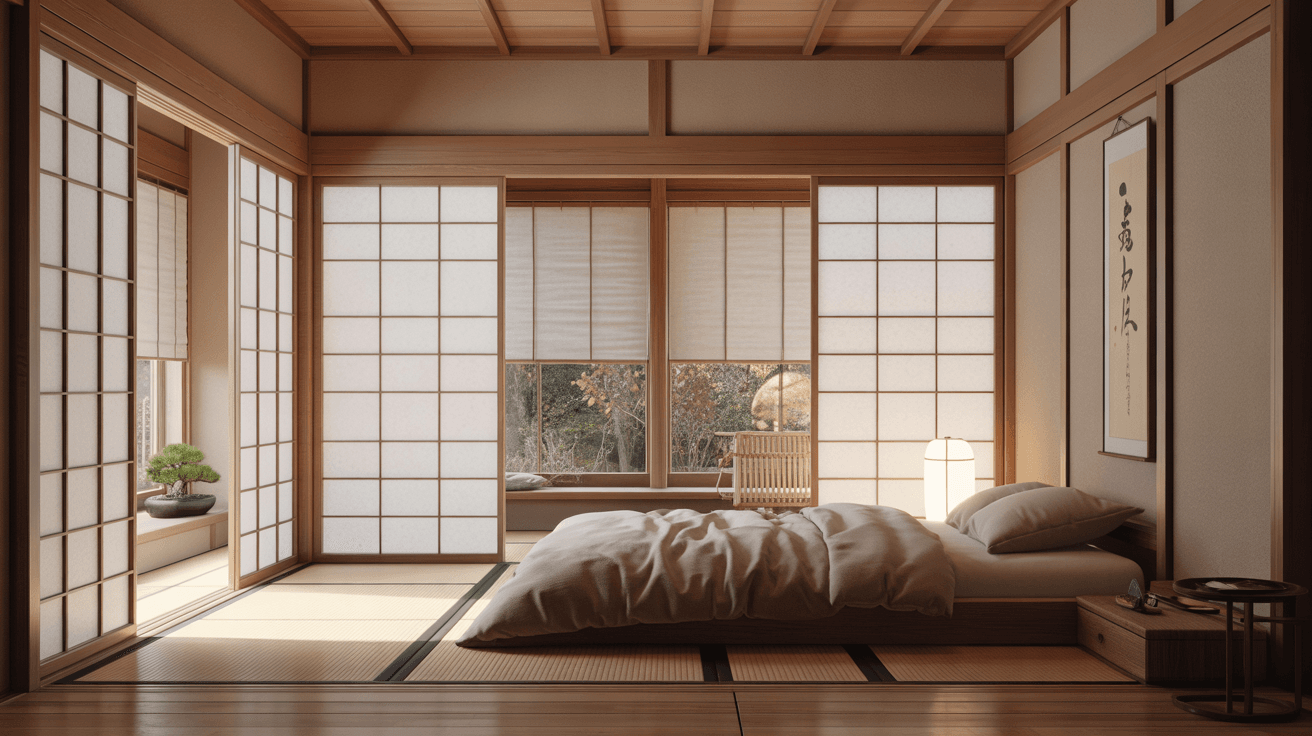
Japanese bedroom design ideas are inspired by simplicity, harmony, and a deep connection to nature. Rooted in the philosophy of wabi-sabi — finding beauty in imperfection — these spaces encourage peace and mindfulness. A room influenced by Japanese bedroom design ideas feels serene, uncluttered, and perfectly balanced, offering a tranquil escape from the chaos of daily life.
The essence of Japanese bedroom design ideas lies in minimalism, natural materials, and a soft color palette. Each element is carefully chosen to create harmony between the human and natural worlds. If you’re looking to turn your bedroom into a calm retreat that nurtures both body and spirit, these ideas will guide you toward that perfect balance.
Embrace Minimalism
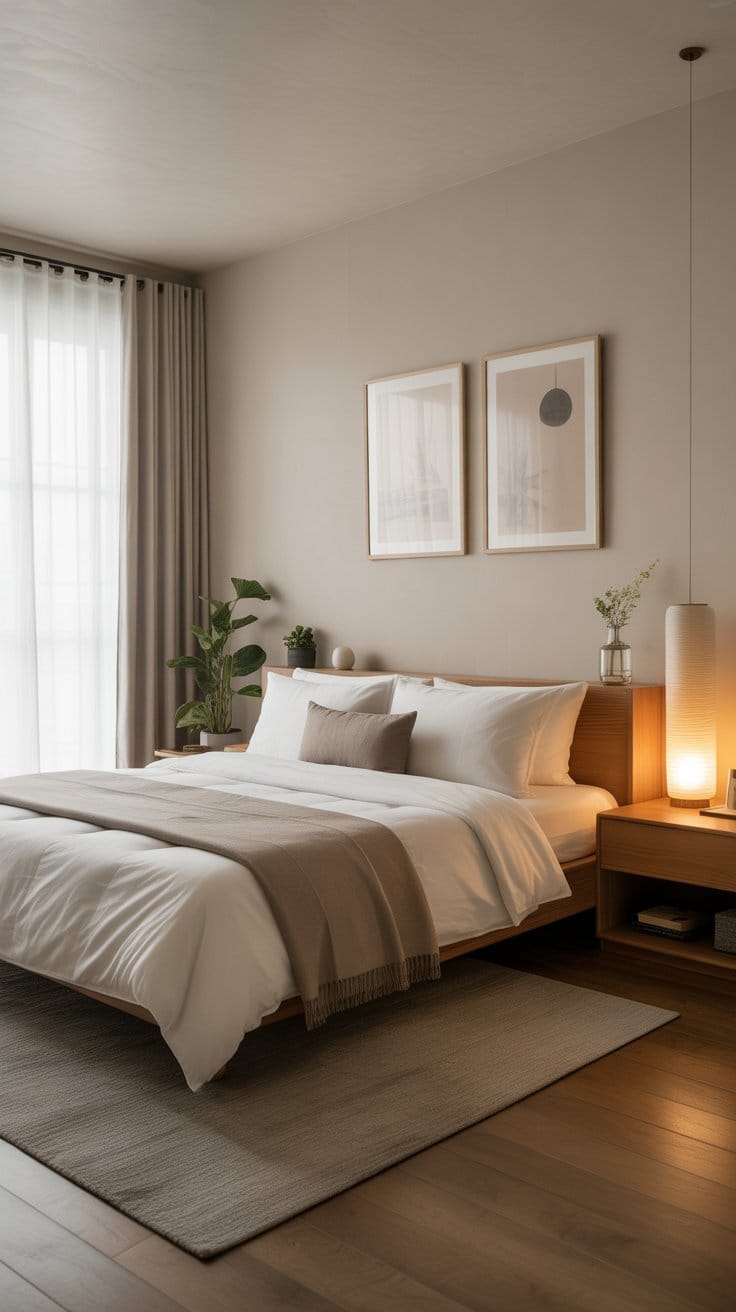
Japanese interiors prioritize minimalism — only the essentials remain. A simple futon, low platform bed, and minimal decor create openness and calm. Clutter is avoided, and every piece serves a purpose.
By following Japanese bedroom design ideas, you’ll discover how less truly means more. Minimalism enhances peace of mind and turns your bedroom into a sanctuary for rest.
Choose Natural Materials
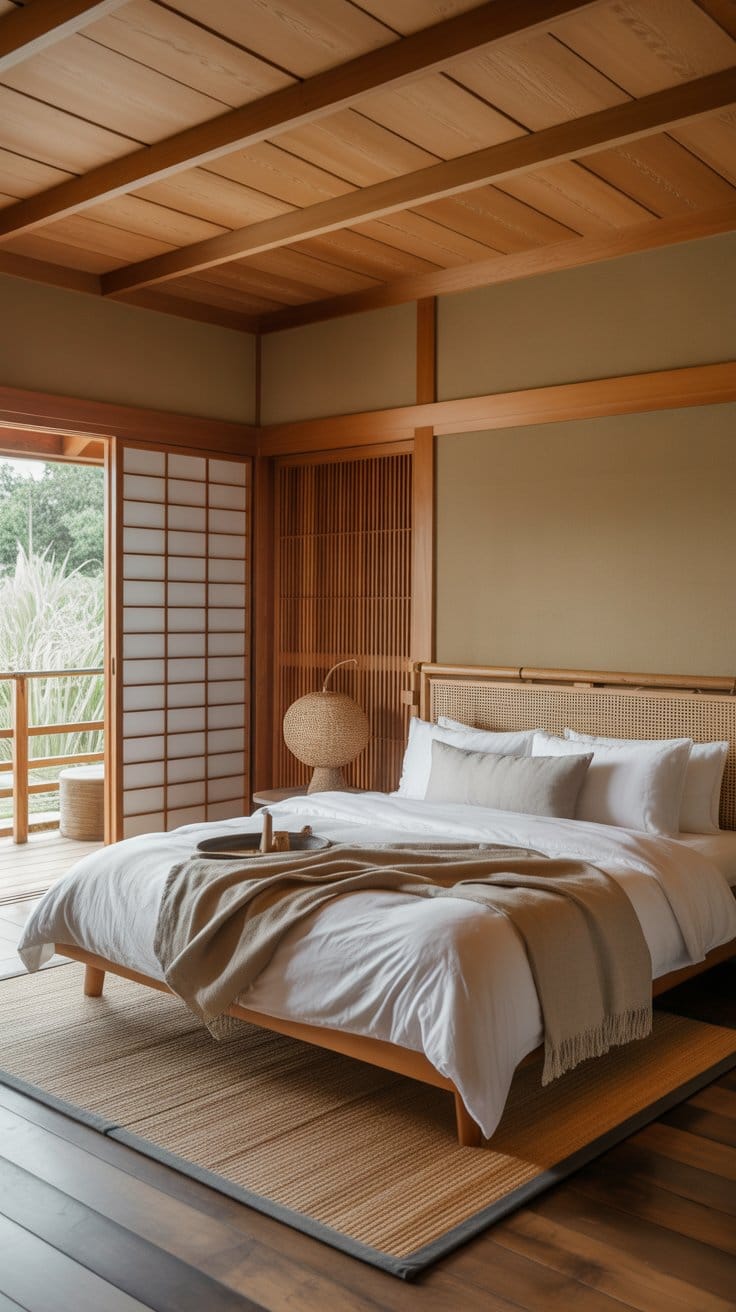
Wood, bamboo, cotton, and linen are central to Japanese interiors. These materials bring warmth and organic texture to your space. Use wooden floors, tatami mats, or rattan details to connect with nature.
Natural textures are key to authentic Japanese bedroom design ideas. They reflect simplicity and grounding energy that fosters balance and calm.
Go for Neutral Colors
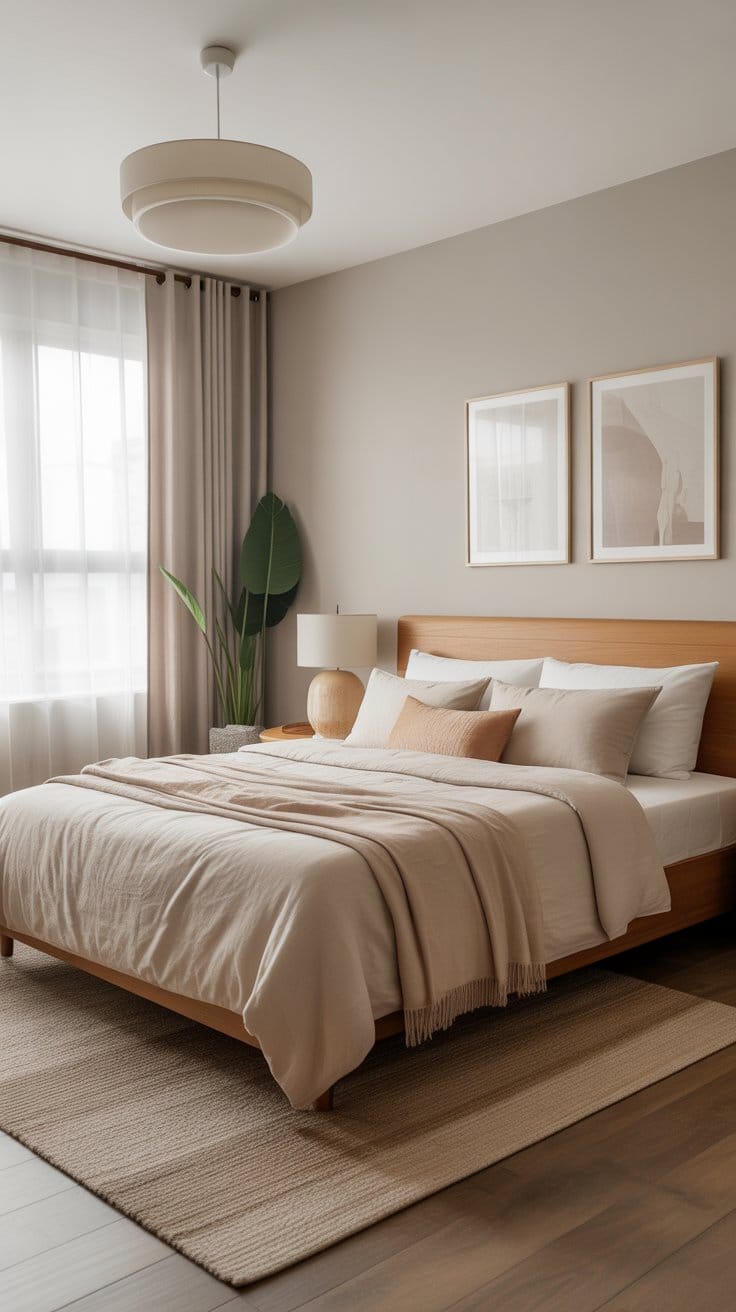
Soft neutral tones like beige, cream, light brown, and soft gray set the foundation for serenity. Avoid bright, bold colors that disturb the natural flow of the room. Neutral hues reflect balance and light, making your space peaceful and timeless.
In Japanese bedroom design ideas, a muted palette symbolizes harmony — allowing your mind to rest and your spirit to recharge.
Include Sliding Doors (Shoji)
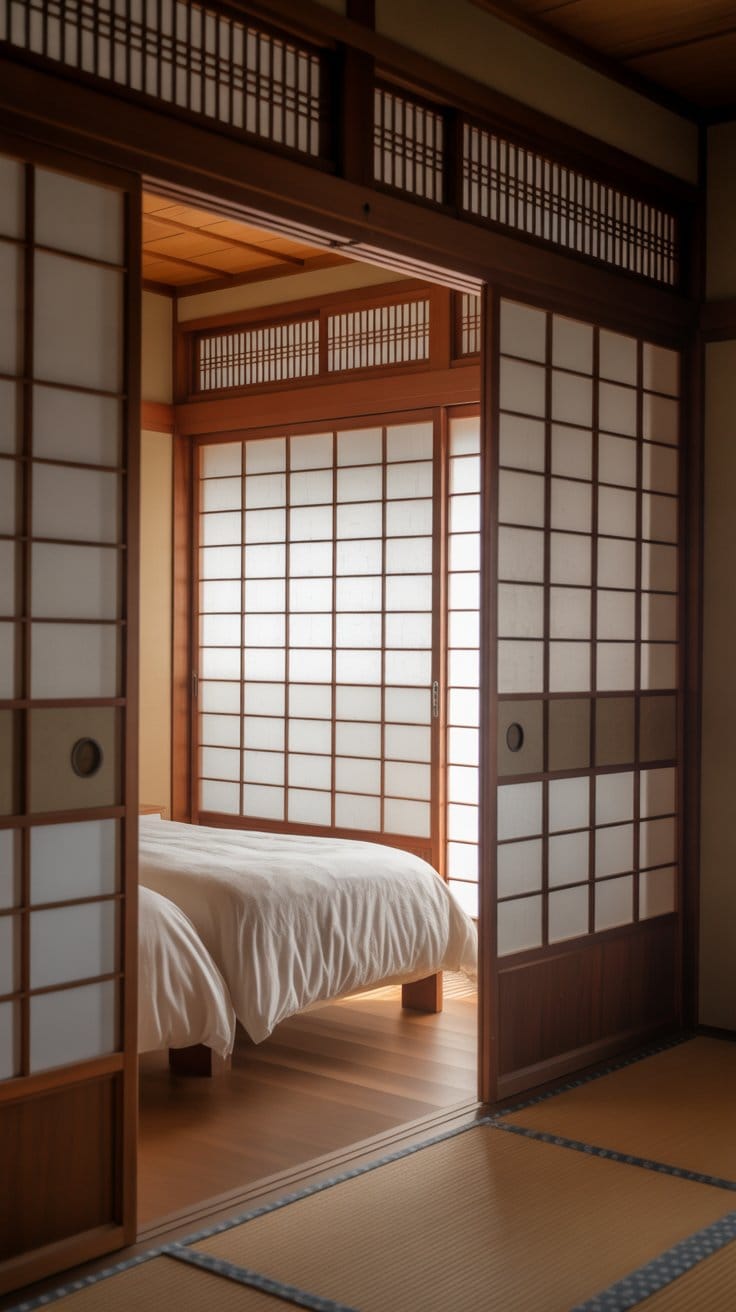
Shoji doors, made from wood and translucent paper, are a hallmark of Japanese design. They save space, allow light diffusion, and create a sense of fluidity between rooms.
Incorporating Shoji doors into your Japanese bedroom design ideas enhances functionality while preserving privacy and elegance. The gentle glow they allow through symbolizes calm and simplicity.
Bring Nature Indoors
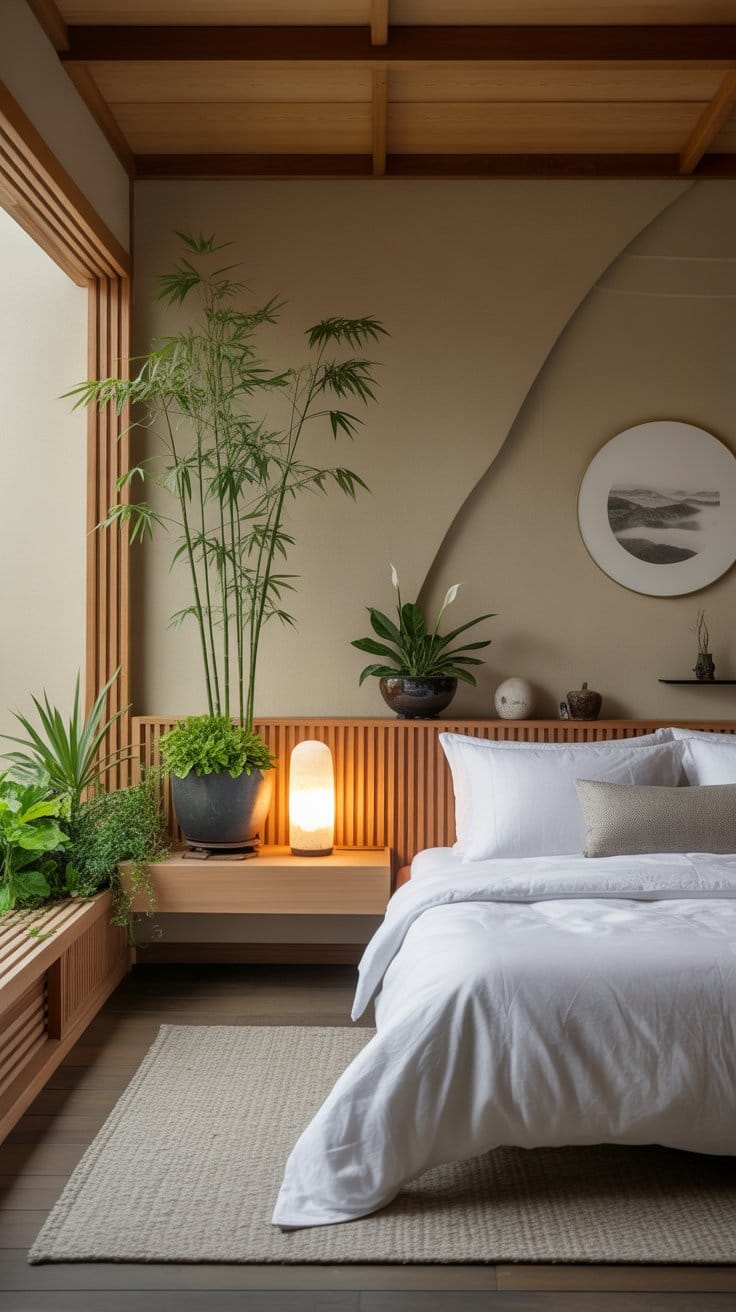
Nature is deeply embedded in Japanese culture. Add plants like bonsai, bamboo, or peace lilies to introduce freshness and life into your space. Natural light, soft textures, and organic forms further this connection.
These biophilic elements are essential in Japanese bedroom design ideas. They help create balance between the indoors and outdoors, inviting peace and rejuvenation.
Use a Low Platform Bed
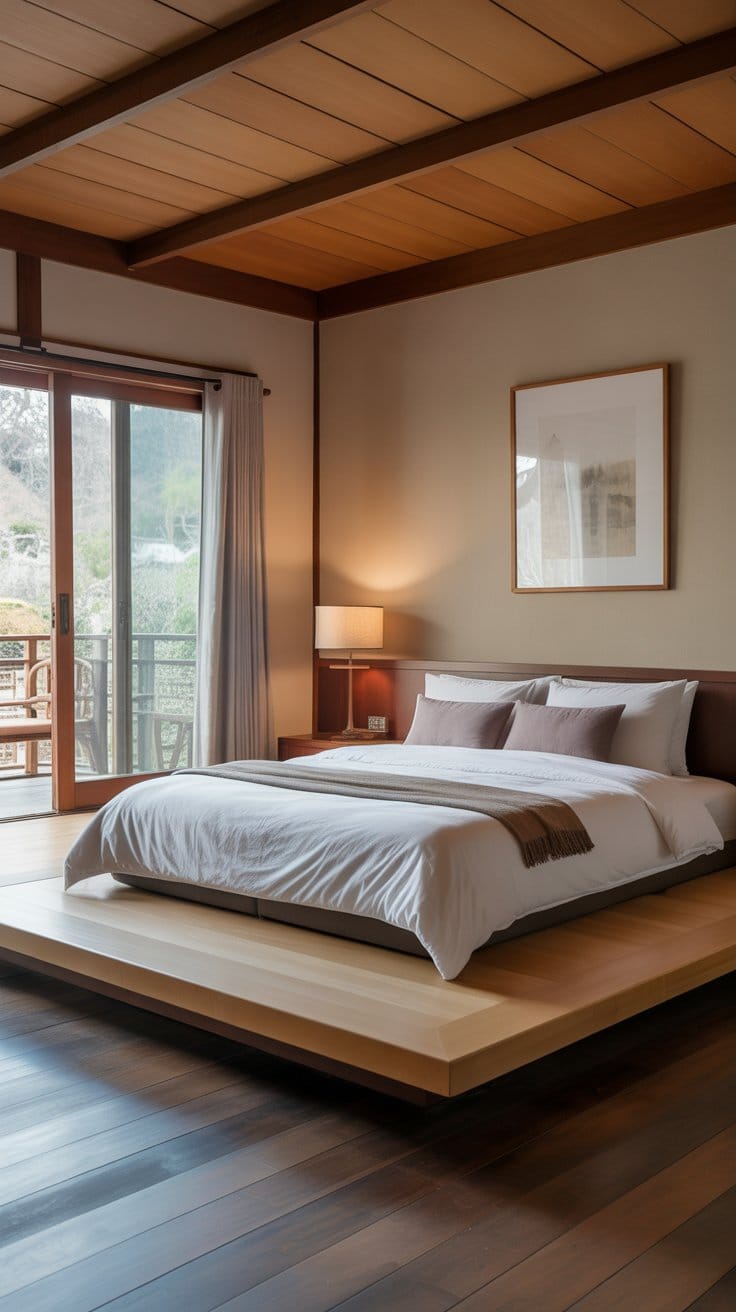
Low beds or futons are staples of Japanese interiors. They create a grounded feeling and make ceilings appear higher. The lower height also promotes a sense of closeness to the earth — symbolic of humility and balance.
This concept reflects the spiritual essence of Japanese bedroom design ideas, where simplicity and grounding coexist beautifully.
Keep the Floor Clear
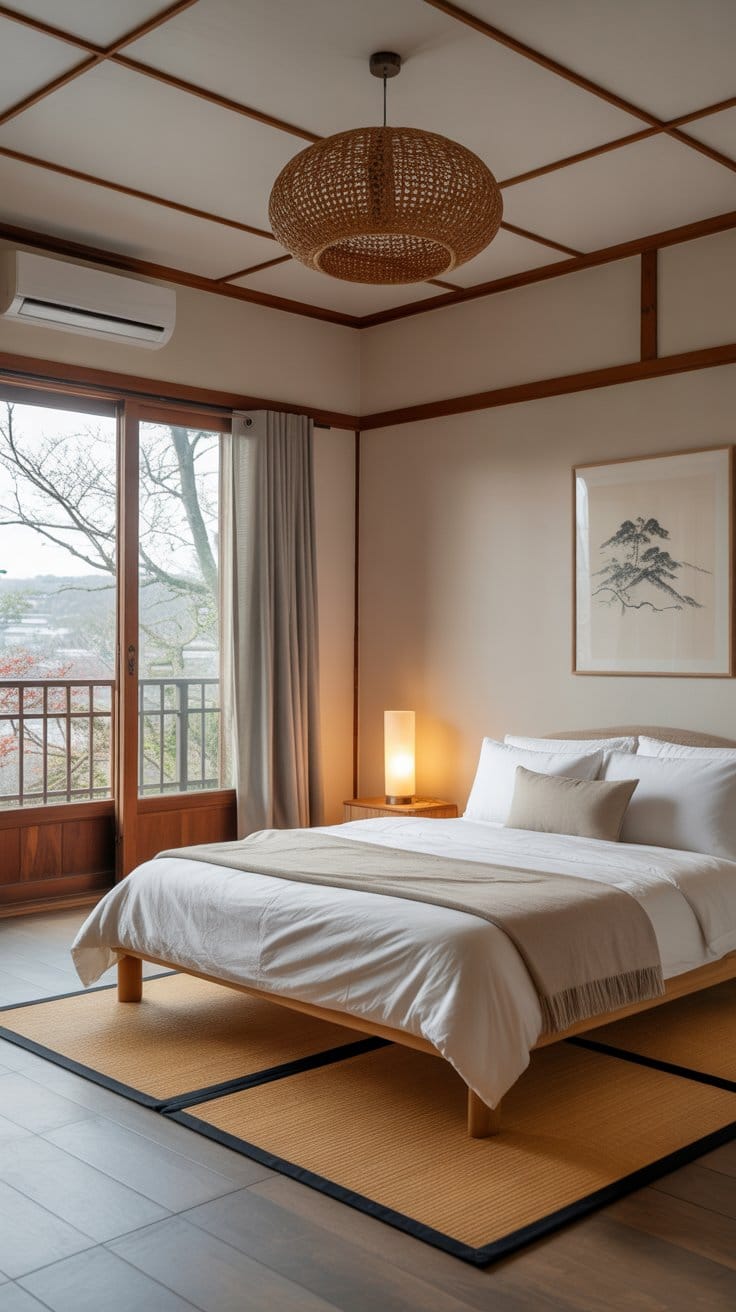
Open space encourages free movement and mental clarity. Avoid excessive furniture and keep the floor uncluttered. Tatami mats or minimalist rugs provide comfort without visual distraction.
The principle of openness in Japanese bedroom design ideas emphasizes the flow of energy — also known as ki — ensuring the room feels light and balanced.
Add Soft Lighting
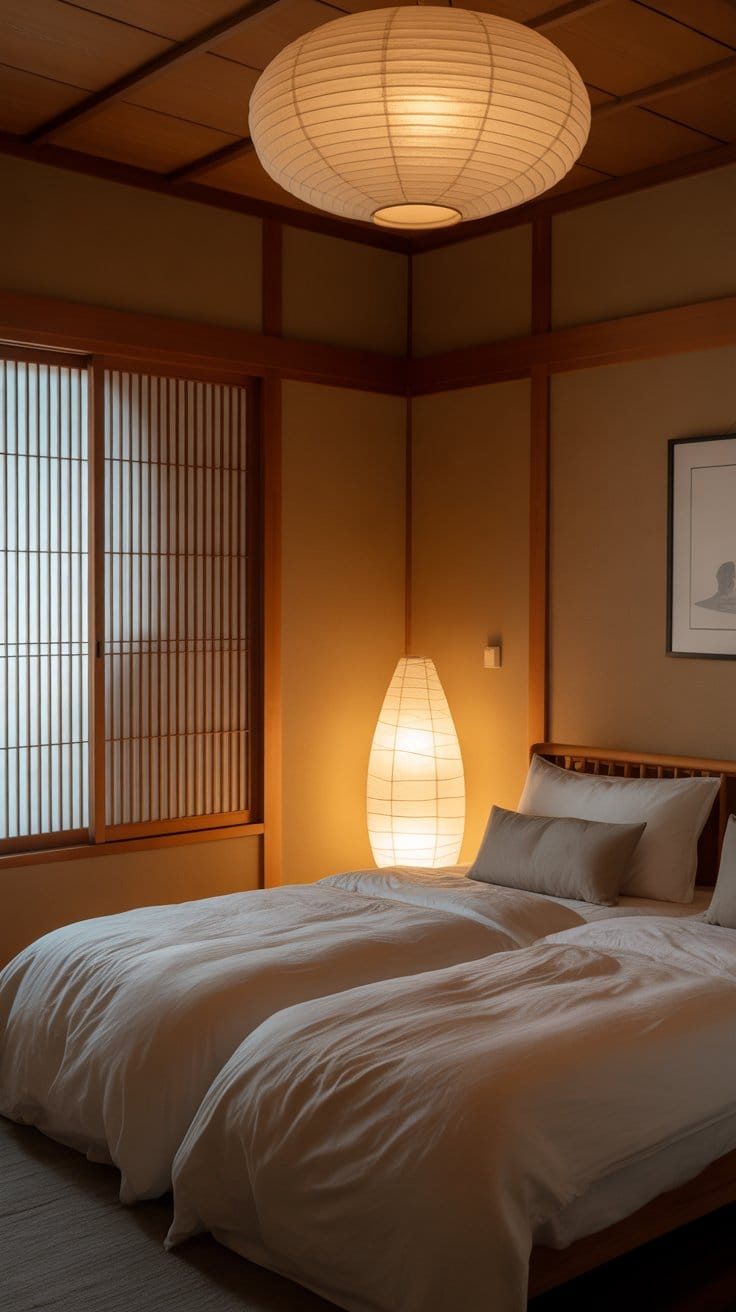
Lighting in Japanese rooms is gentle and diffused. Avoid harsh overhead lights; instead, use paper lanterns, warm lamps, or floor lighting. Soft illumination creates intimacy and enhances the sense of calm.
The subtle glow is vital in Japanese bedroom design ideas, shaping the tranquil atmosphere that defines this aesthetic.
Integrate Natural Scents
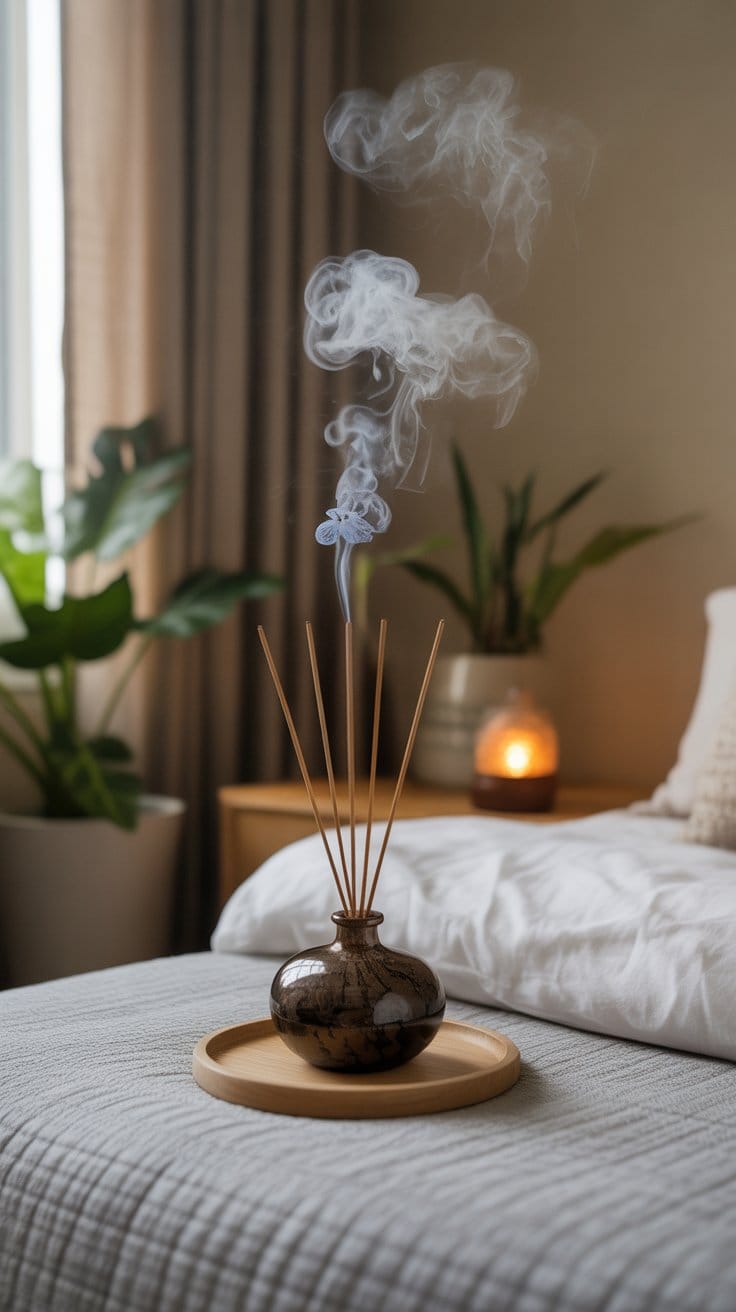
Scent plays a major role in creating ambiance. Use natural fragrances like sandalwood, hinoki wood, or jasmine to evoke peace. An aroma diffuser or incense stick adds a meditative touch.
Fragrance completes Japanese bedroom design ideas, appealing to your senses and enhancing relaxation.
Incorporate Wabi-Sabi Decor
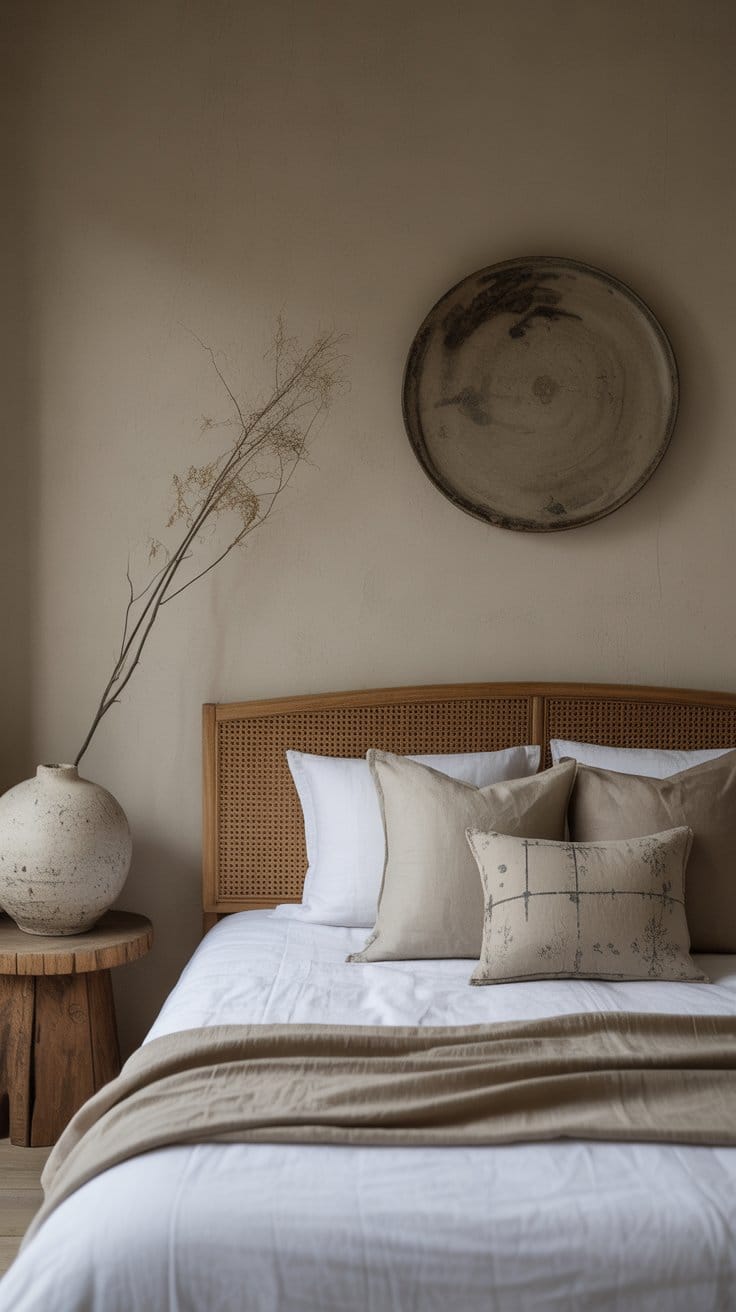
Wabi-sabi is the art of finding beauty in imperfection. Choose handmade ceramics, rustic textures, or slightly uneven wooden surfaces to bring authenticity and depth to your room.
This philosophy enriches Japanese bedroom design ideas with emotional warmth and a reminder that imperfection is part of nature’s charm.
Create Balance Through Symmetry
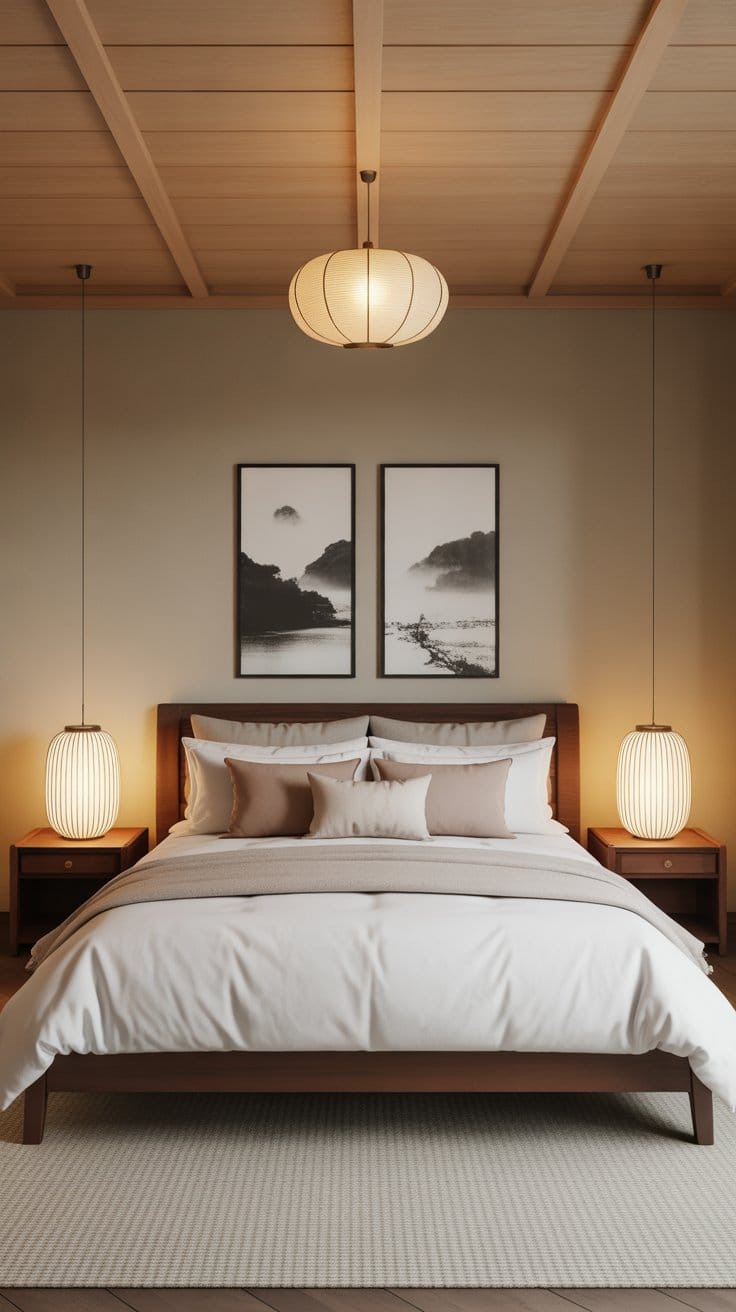
Balance and proportion are core principles in Japanese aesthetics. Use symmetrical arrangements — matching lamps, bedside tables, or artwork — to create visual harmony.
Symmetry is a quiet yet powerful feature in Japanese bedroom design ideas, reinforcing balance in both design and mood.
Keep Decorations Subtle
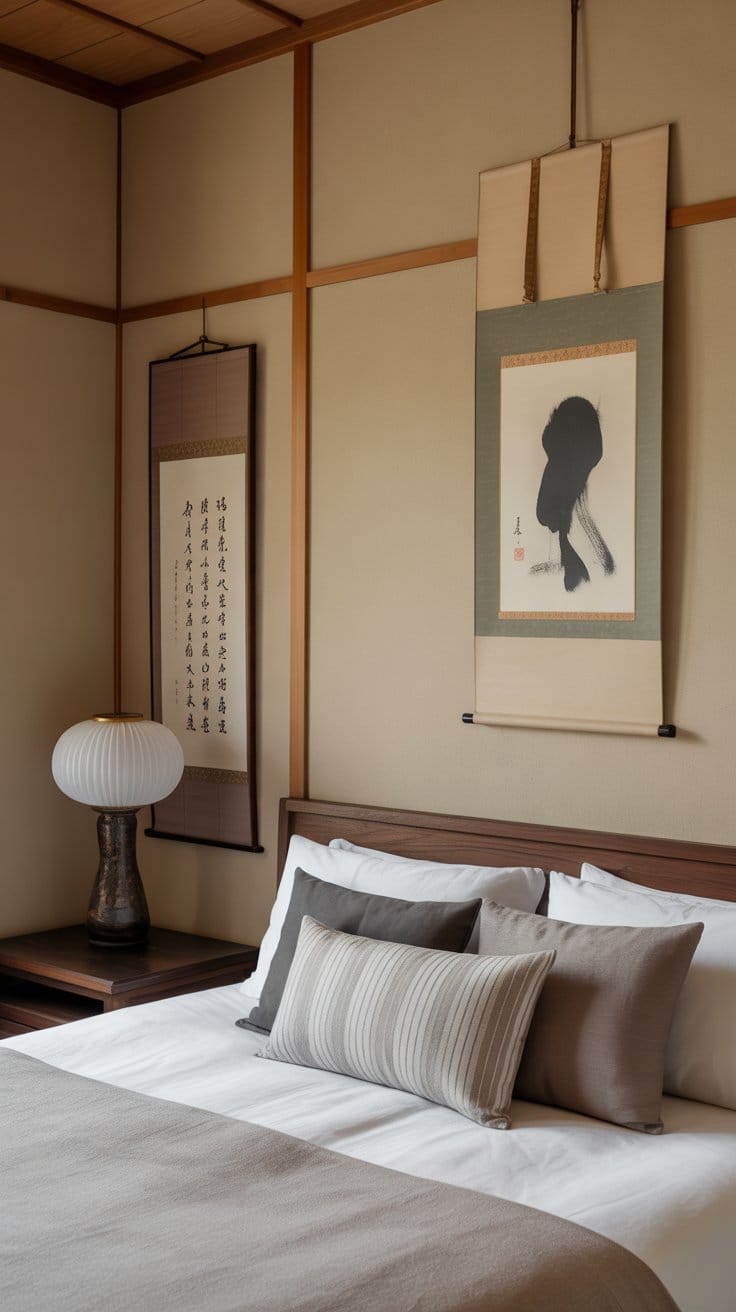
Instead of crowding walls, display one meaningful piece of art, a scroll painting, or a calligraphy panel. Each decoration should tell a story or evoke calm emotions.
This minimalist approach highlights the intentionality behind Japanese bedroom design ideas — where every object has purpose and meaning.
Use Tatami Mats
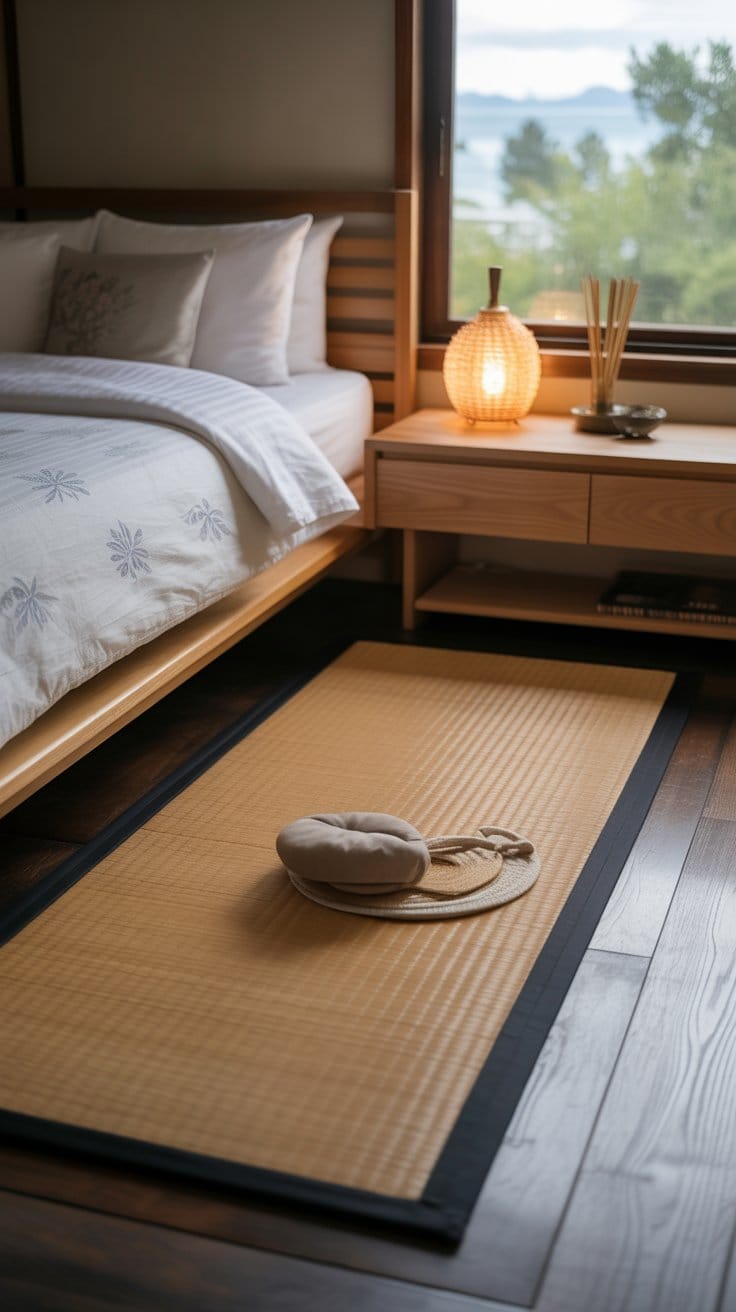
Tatami mats are traditional flooring made of woven straw. They offer comfort underfoot and a natural scent that enhances calm. Even one mat beside the bed can bring an authentic touch.
Tatami symbolizes simplicity and grounding in Japanese bedroom design ideas, serving as a physical and spiritual connection to nature.
Add a Zen Corner
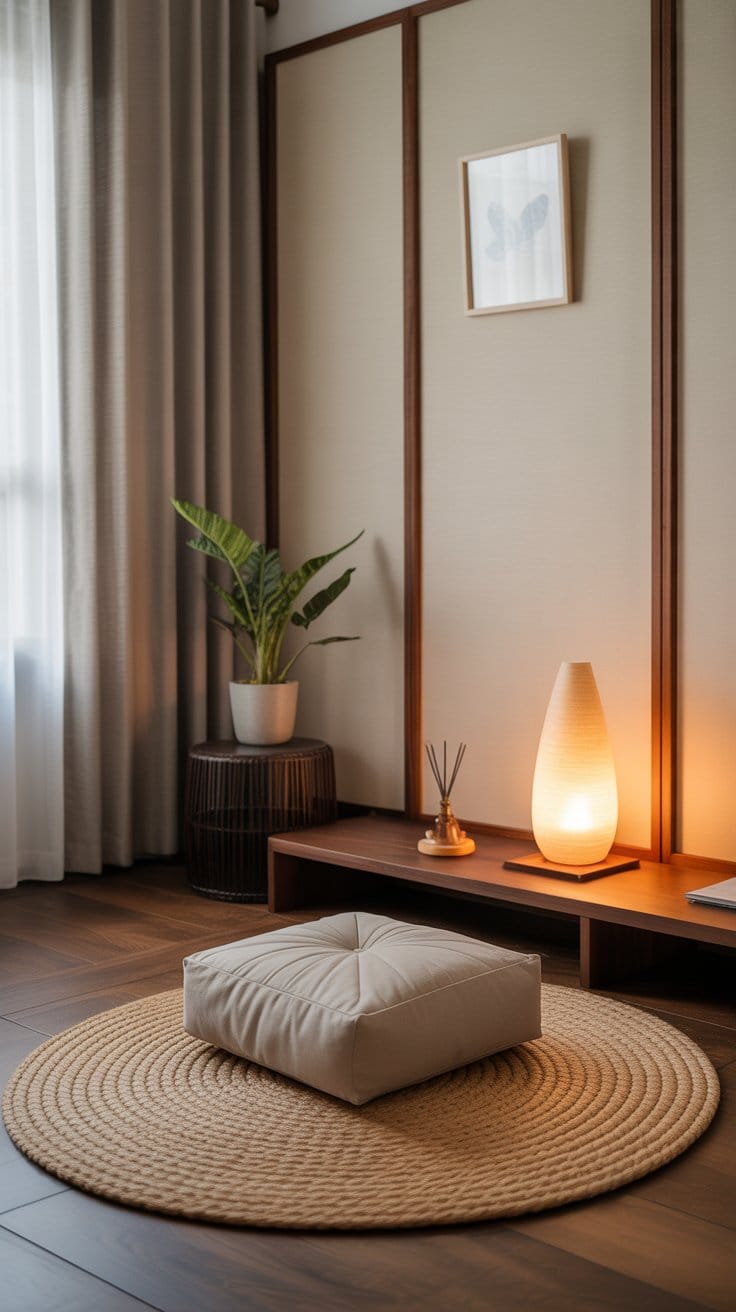
Dedicate a small area for meditation or quiet reflection. A floor cushion, low table, and a small plant or incense holder can create your personal zen spot.
This mindful space embodies the heart of Japanese bedroom design ideas, nurturing stillness and mindfulness in your daily life.
Choose Wooden Accents
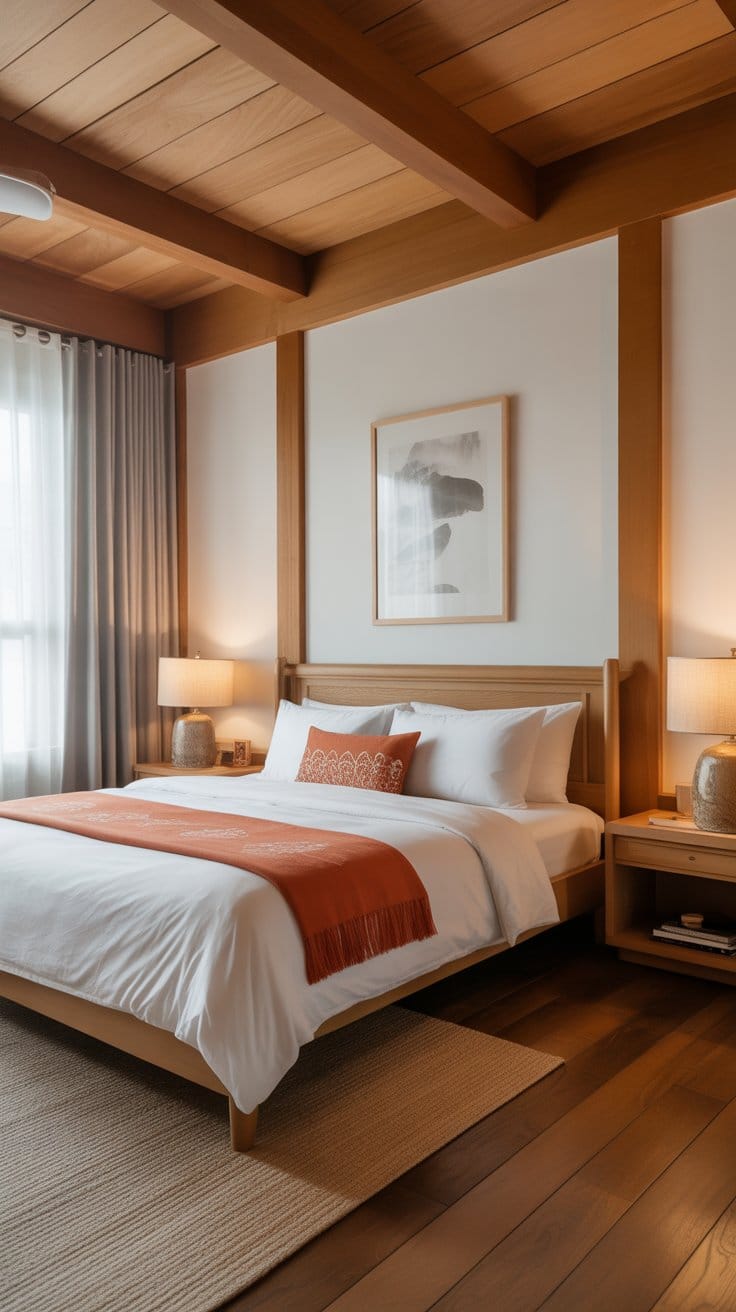
Wooden beams, bed frames, or side tables bring natural beauty and warmth to your bedroom. Choose light or medium wood tones to maintain a soft, balanced look.
Incorporating wood enhances the harmony within Japanese bedroom design ideas, linking your space to nature’s timeless rhythm.
Introduce Shoji Lamps
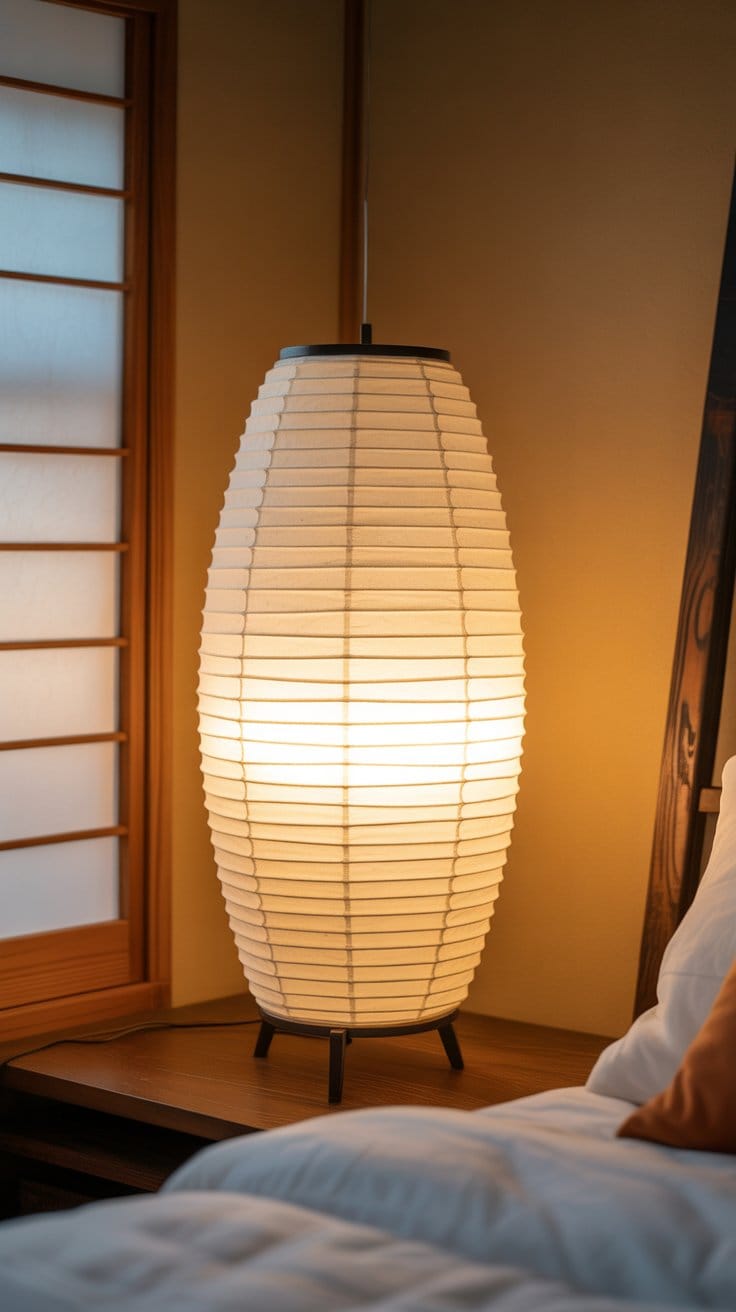
Shoji lamps, made of rice paper and wood, diffuse light beautifully while adding texture. Their minimalist structure aligns with traditional Japanese architecture.
Lighting crafted from natural materials complements Japanese bedroom design ideas, creating a cohesive, soothing visual experience.
Add Textural Layers
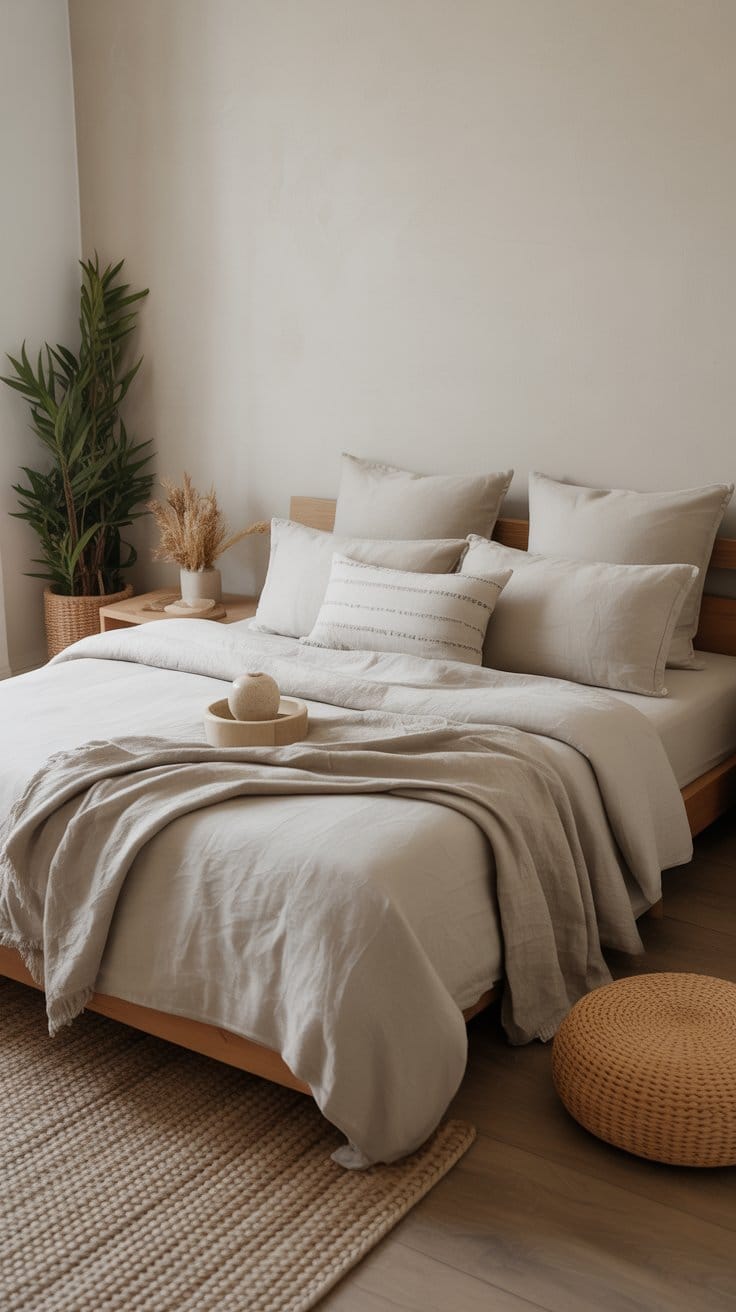
Use linen throws, cotton sheets, and woven mats for tactile comfort. Layers of soft, breathable materials enhance coziness without cluttering the aesthetic.
Texture plays an important role in Japanese bedroom design ideas, transforming simplicity into warmth and inviting relaxation.
Keep Technology Minimal
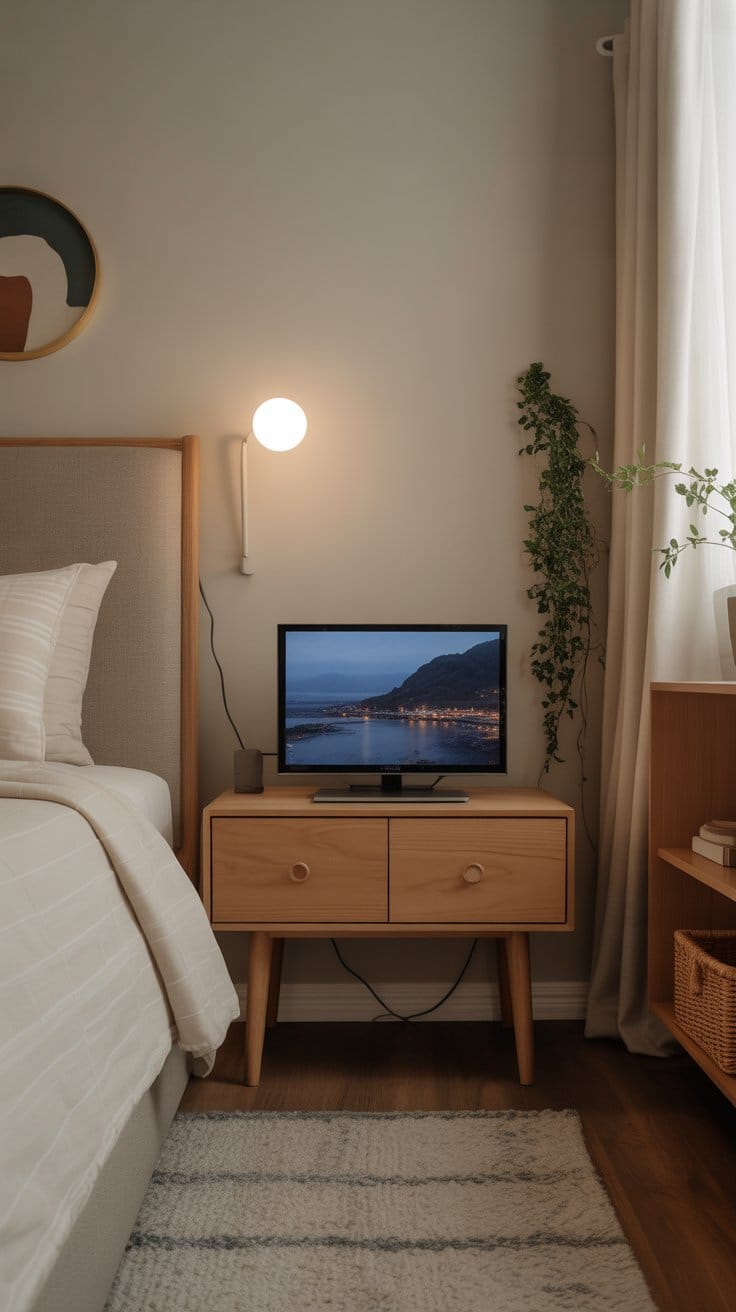
Reduce digital distractions by limiting electronics. Hide cords and keep gadgets out of sight. A tech-free bedroom supports mindfulness and quality rest.
Digital simplicity strengthens the essence of Japanese bedroom design ideas, where mental clarity is valued over constant stimulation.
Blend Indoor and Outdoor Views
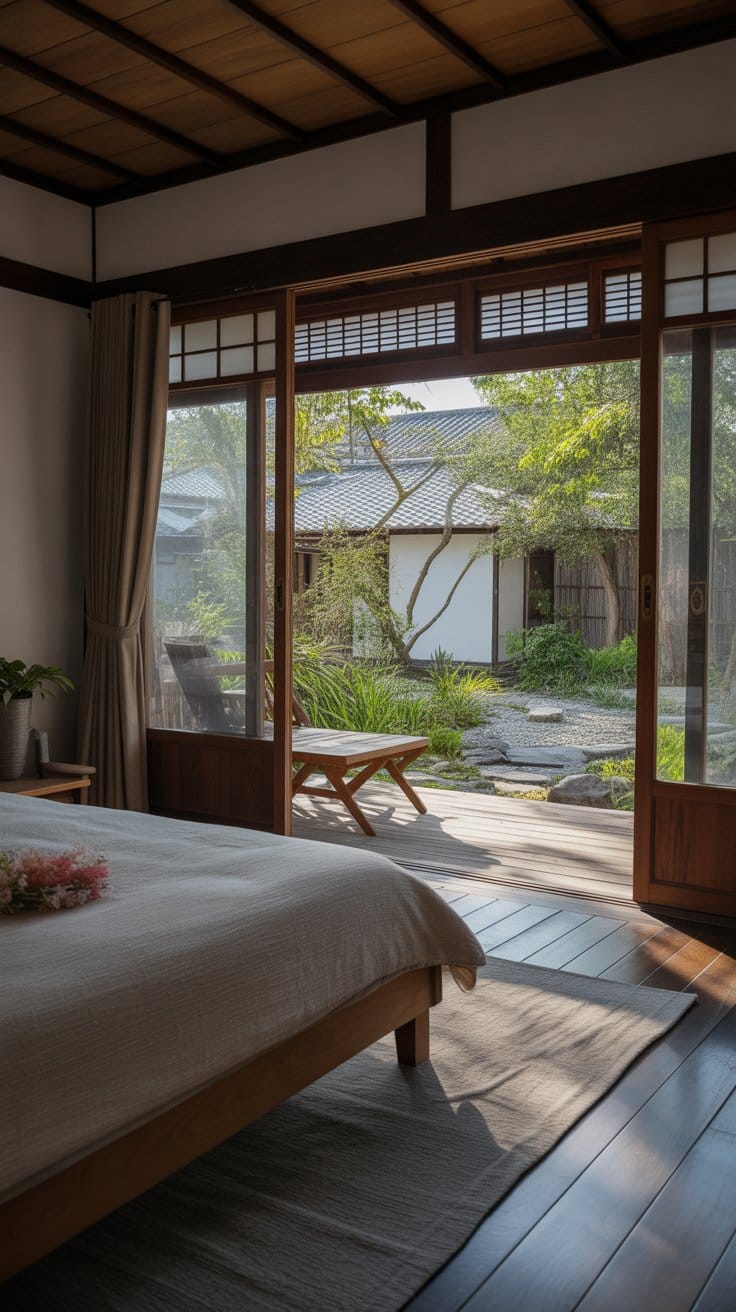
If possible, use large windows or sliding glass doors to connect your room to the outside world. The view of a garden or natural light source enhances peace and grounding.
The flow between interior and nature defines Japanese bedroom design ideas, symbolizing unity and harmony with the environment.
Add a Touch of Green
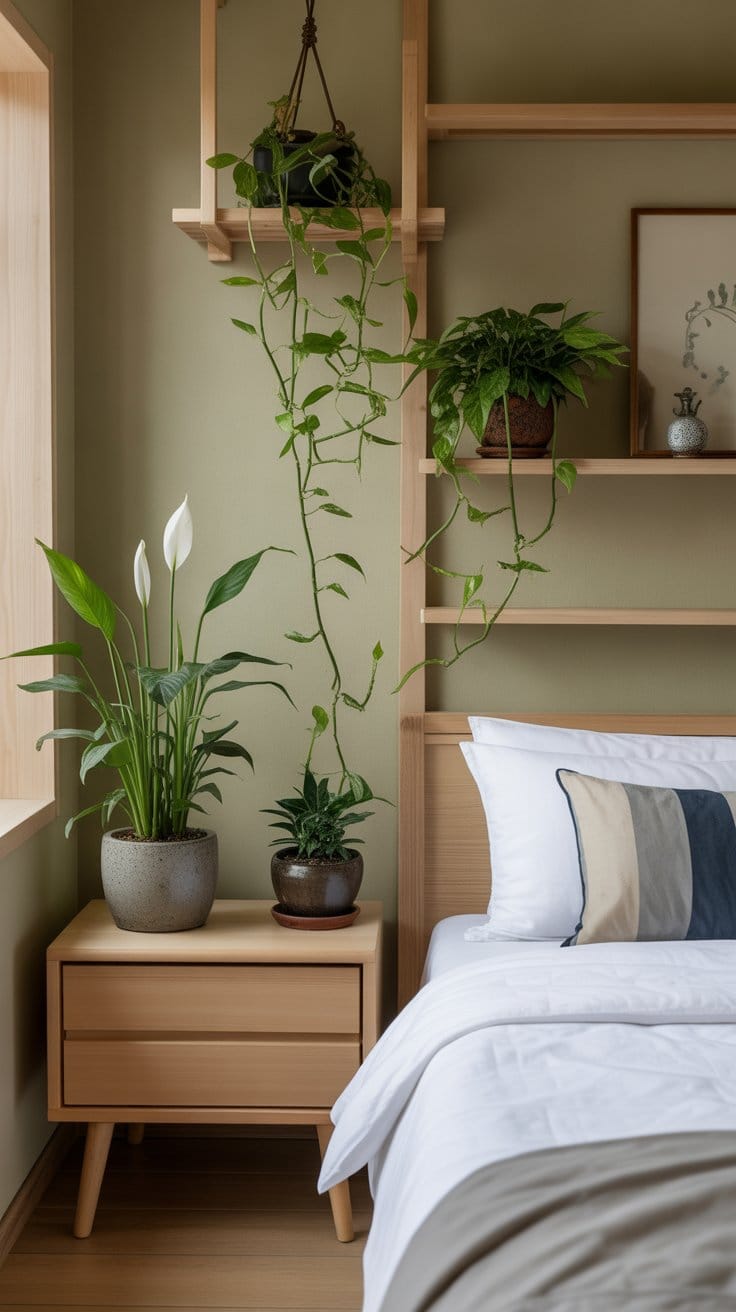
Introduce plants like bonsai, lucky bamboo, or peace lilies to refresh the air and promote well-being. These living elements provide movement and natural beauty to your serene environment.
Plants are an essential part of Japanese bedroom design ideas, representing growth, life, and harmony with nature — the key principles of Japanese living.
Use Simple Bedding
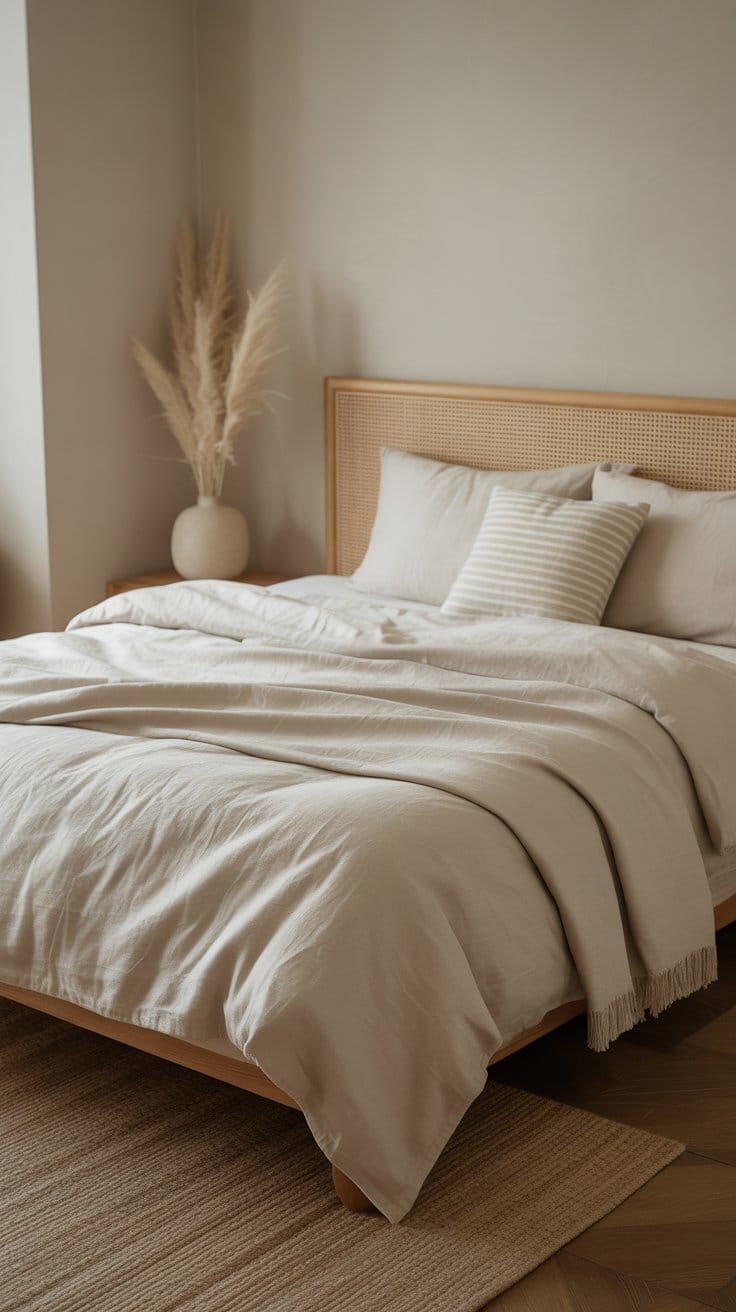
Choose bedding in natural fabrics like cotton or linen, with muted tones such as off-white or sand. Avoid bold patterns; instead, focus on subtle textures that evoke calmness.
In Japanese bedroom design ideas, bedding simplicity mirrors mental clarity. Your bed becomes a symbol of comfort and peace, not clutter or excess.
Install Sliding Closets
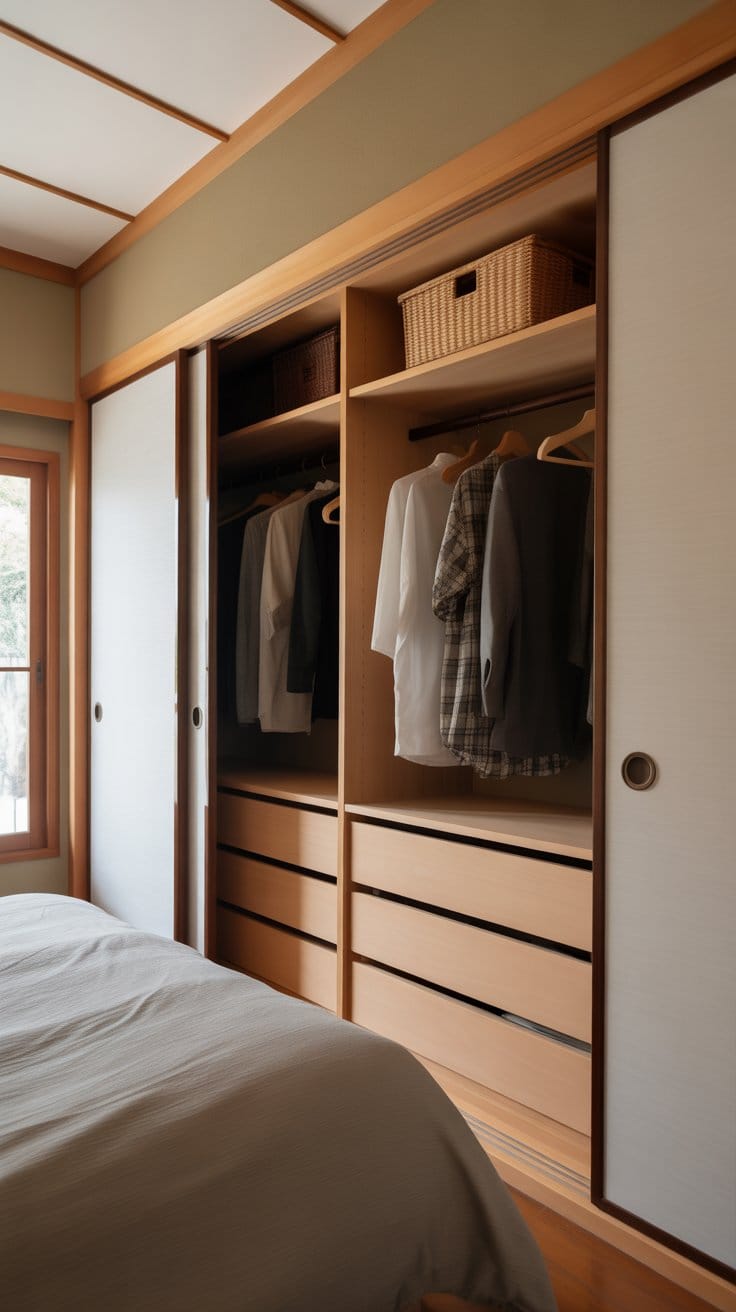
Traditional Japanese homes often use sliding closets instead of bulky wardrobes. These save space and maintain visual flow. Opt for smooth, light wood or white finishes to keep the room open and balanced.
Sliding systems are vital in Japanese bedroom design ideas, as they maintain harmony and avoid interruption of space continuity.
Create an Accent Wall
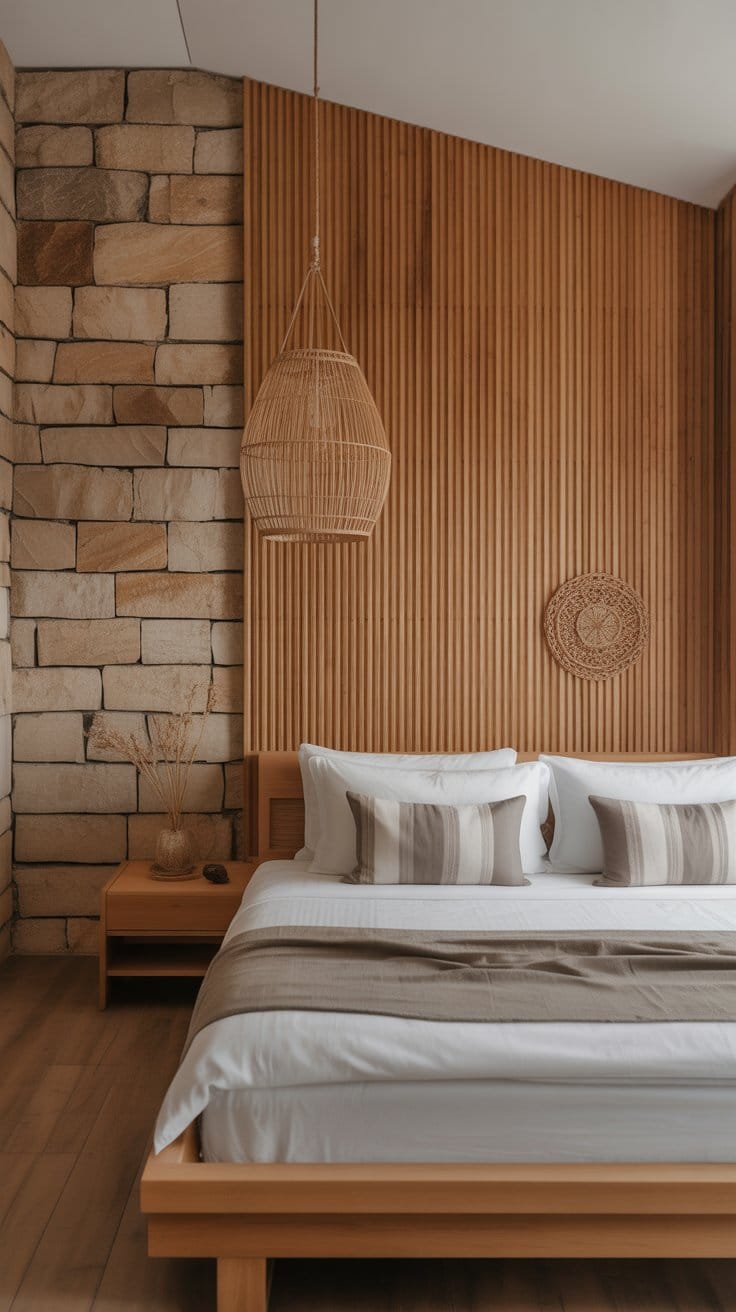
Add depth by introducing a feature wall made of natural stone, bamboo, or wood slats. It adds character while keeping the natural and minimal look intact.
Accent walls highlight craftsmanship and texture in Japanese bedroom design ideas, bridging simplicity and artistry.
Incorporate Floor Seating
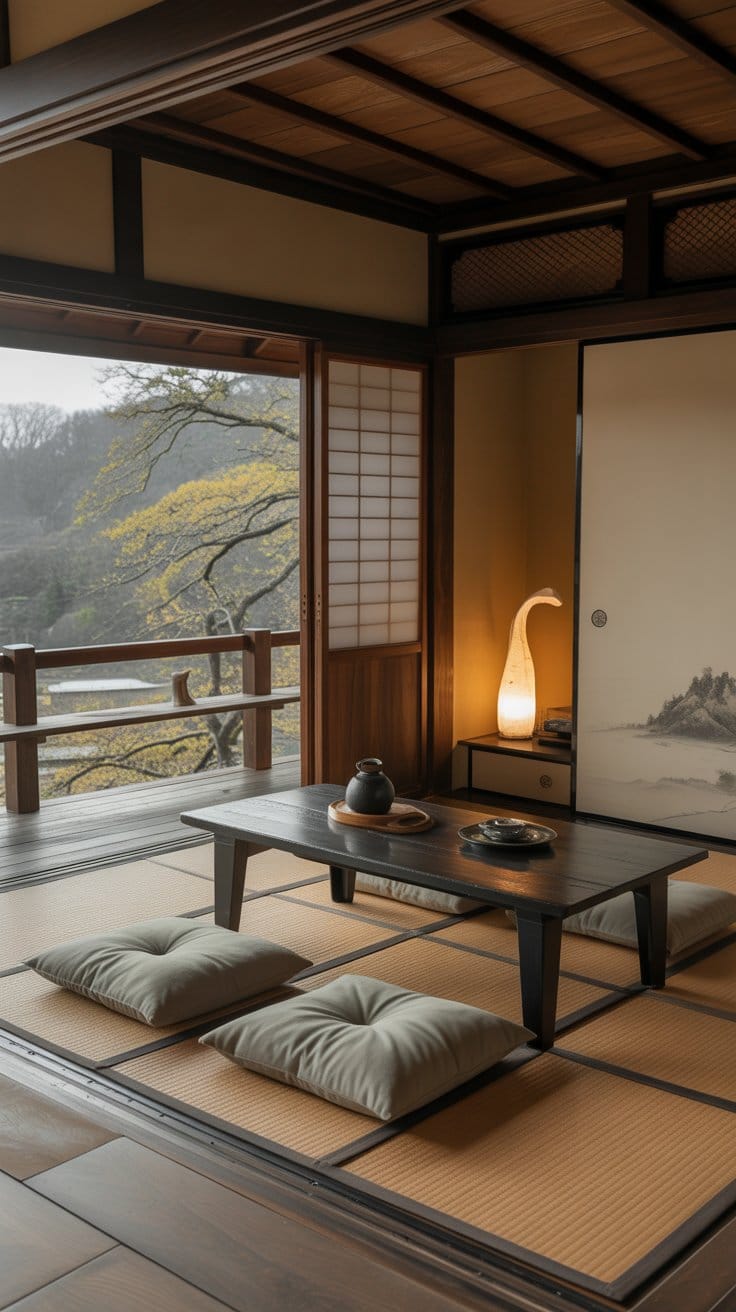
A floor-level seating arrangement encourages a grounded lifestyle. Add a low table with floor cushions for tea, reading, or meditation. It connects daily habits with traditional Japanese customs.
This humble element deepens Japanese bedroom design ideas, promoting relaxation and appreciation for slower living.
Focus on Craftsmanship
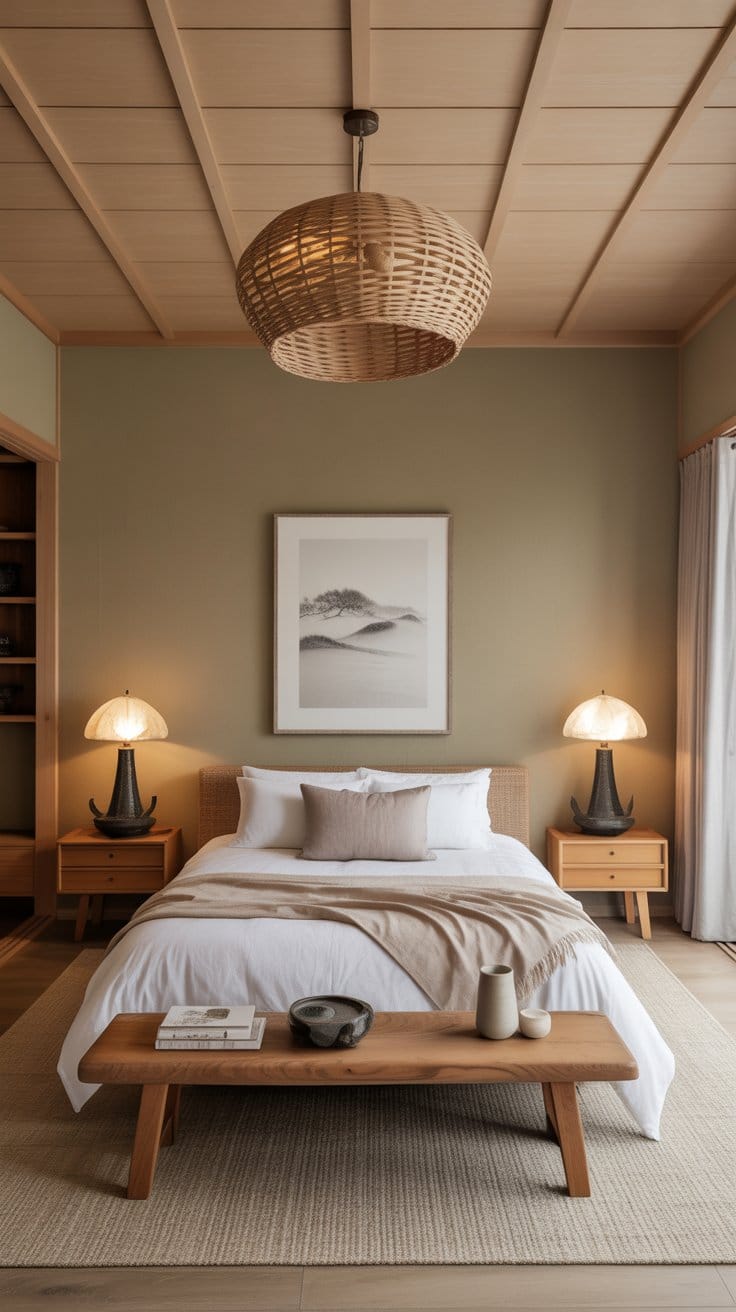
Japanese interiors celebrate craftsmanship. Look for hand-carved furniture, pottery, or handwoven baskets. These items embody authenticity and timeless quality.
Incorporating artisanal pieces adds soul to Japanese bedroom design ideas, blending function, culture, and beauty seamlessly.
Balance Light and Shadow
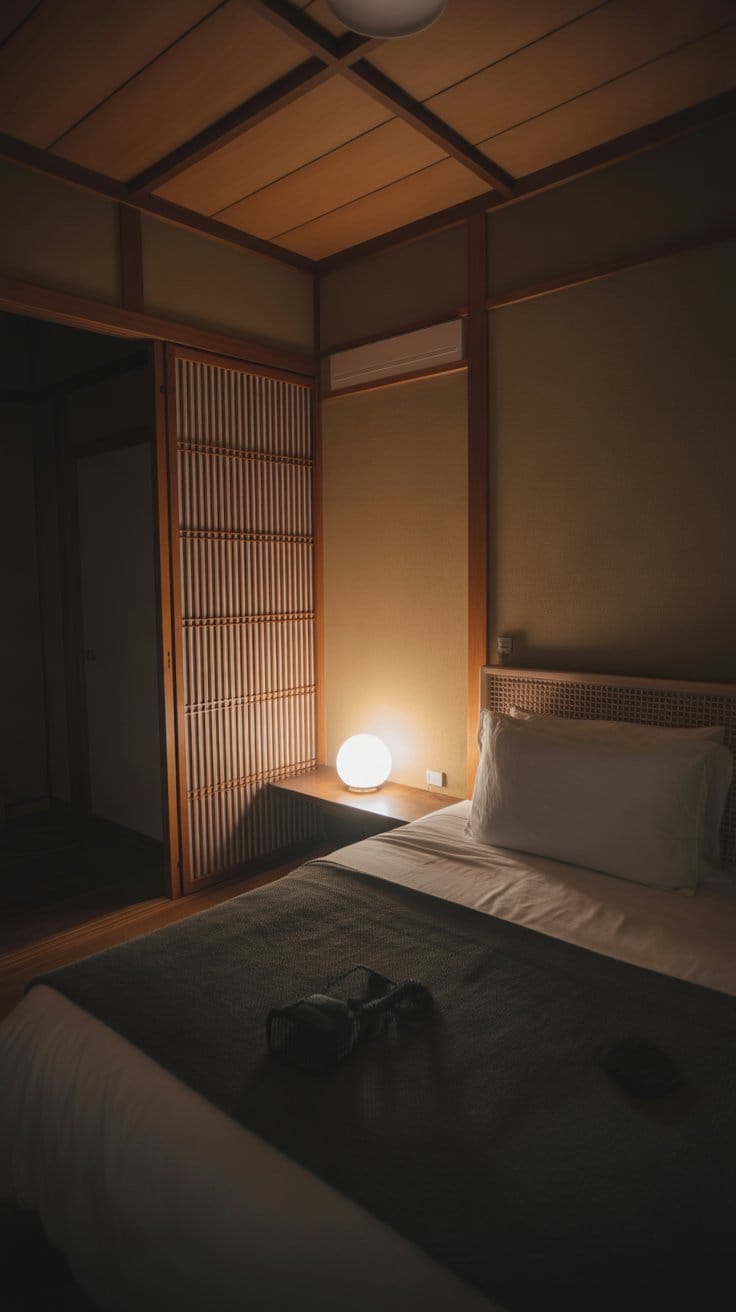
Japanese design values light and shadow interplay, where subtle darkness adds intimacy. Use diffused lighting instead of bright white bulbs. Dim corners evoke peace and mystery, fostering a relaxing environment.
This poetic approach defines Japanese bedroom design ideas, turning your room into a sensory experience rather than just a visual one.
Keep Lines Clean and Simple
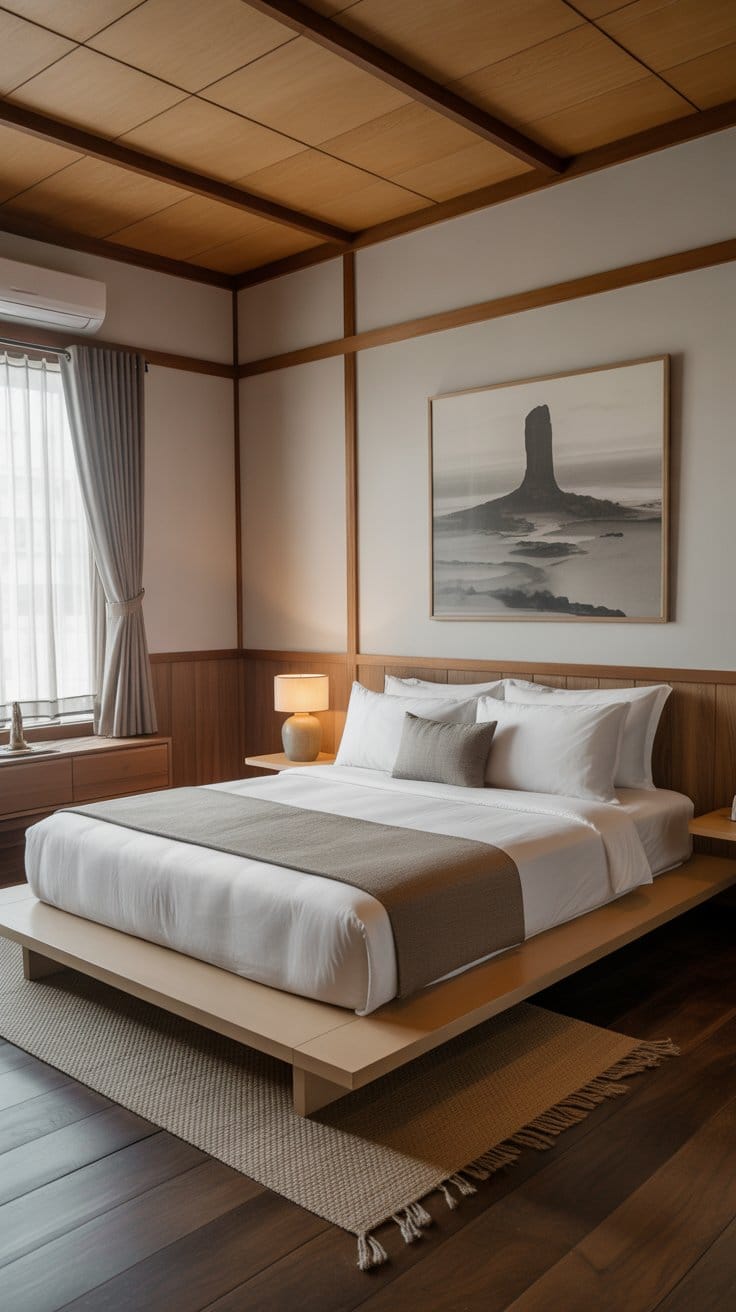
Straight, uncluttered lines promote clarity. Avoid ornate carvings or excessive decorations. Every shape should feel purposeful and aligned with natural flow.
This structural simplicity makes Japanese bedroom design ideas both visually calm and emotionally grounding.
Integrate Natural Sounds
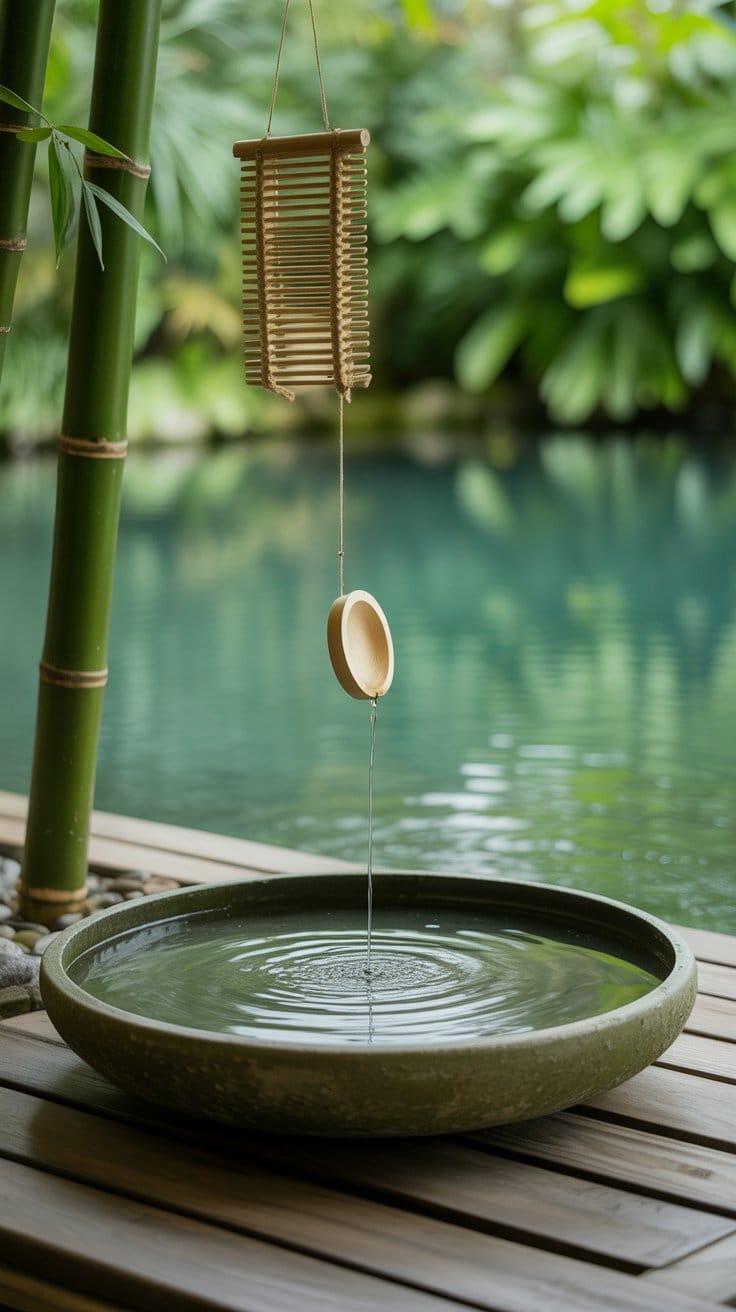
Consider subtle sound elements like a tabletop fountain or bamboo chime. The gentle sounds of water or wind enhance mindfulness and create an immersive natural atmosphere.
These sensory details elevate Japanese bedroom design ideas, connecting you deeper to the tranquility of nature.
Use Art with Meaning
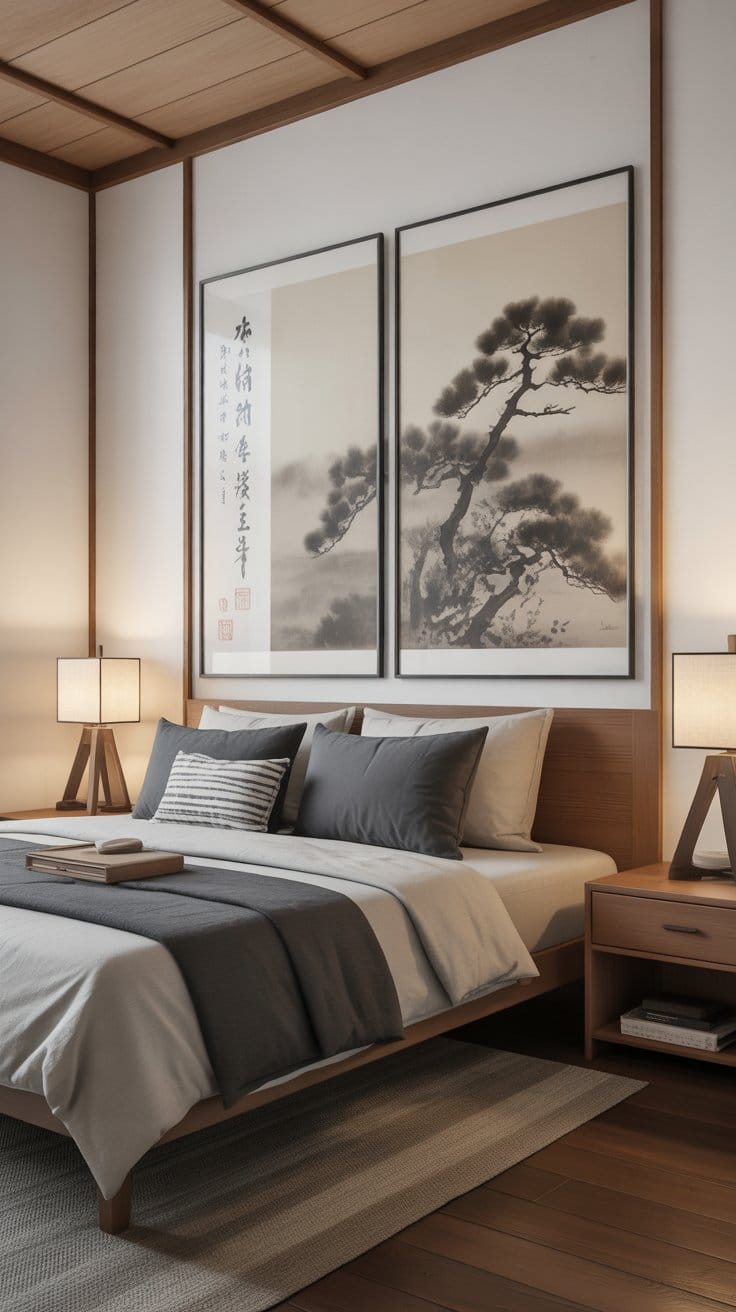
Choose wall art that reflects Japanese culture — ink paintings, nature sketches, or minimalist calligraphy. These artworks carry spiritual meaning, reminding you of patience and impermanence.
Symbolic art strengthens the authenticity of Japanese bedroom design ideas, turning decor into reflection and mindfulness.
Keep Furniture Low and Light
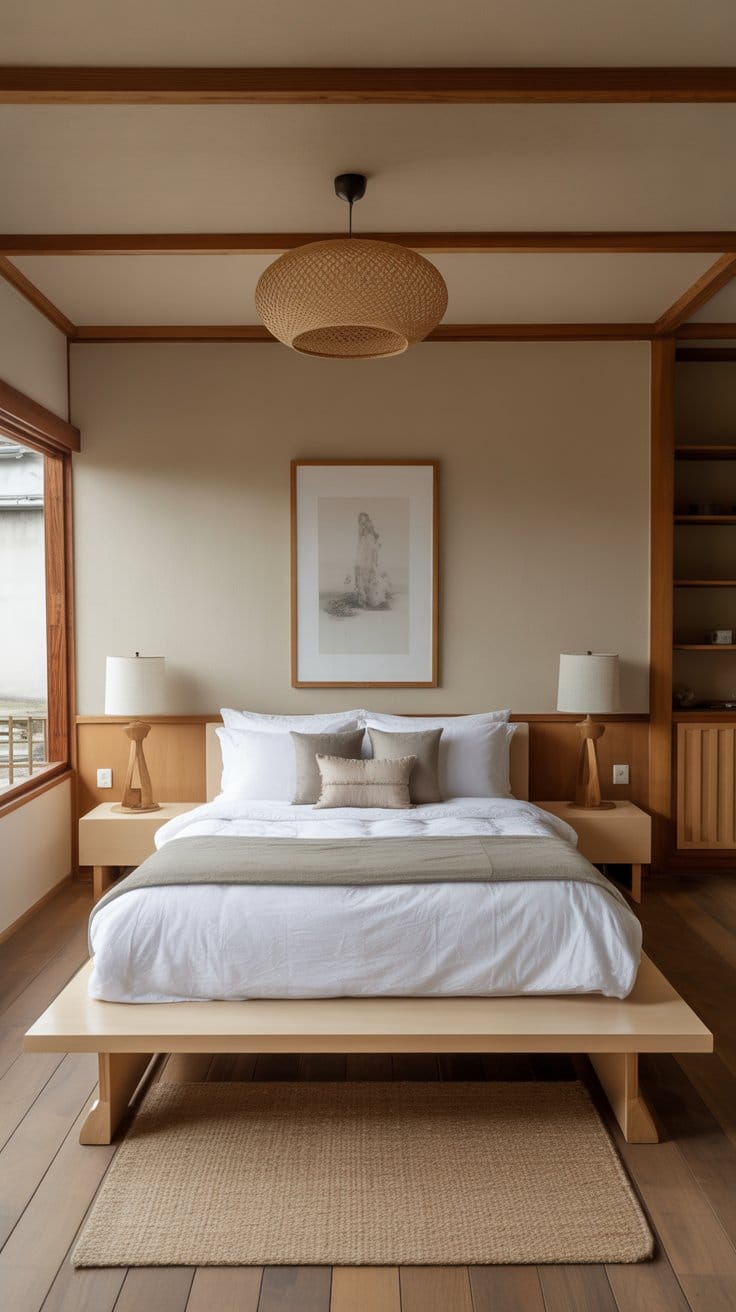
Low furniture enhances the sense of openness. Choose lightweight wooden tables or beds close to the ground. Avoid bulky wardrobes or heavy upholstery.
This approach emphasizes the humble essence of Japanese bedroom design ideas, blending practicality with graceful restraint.
Add Soft Textiles
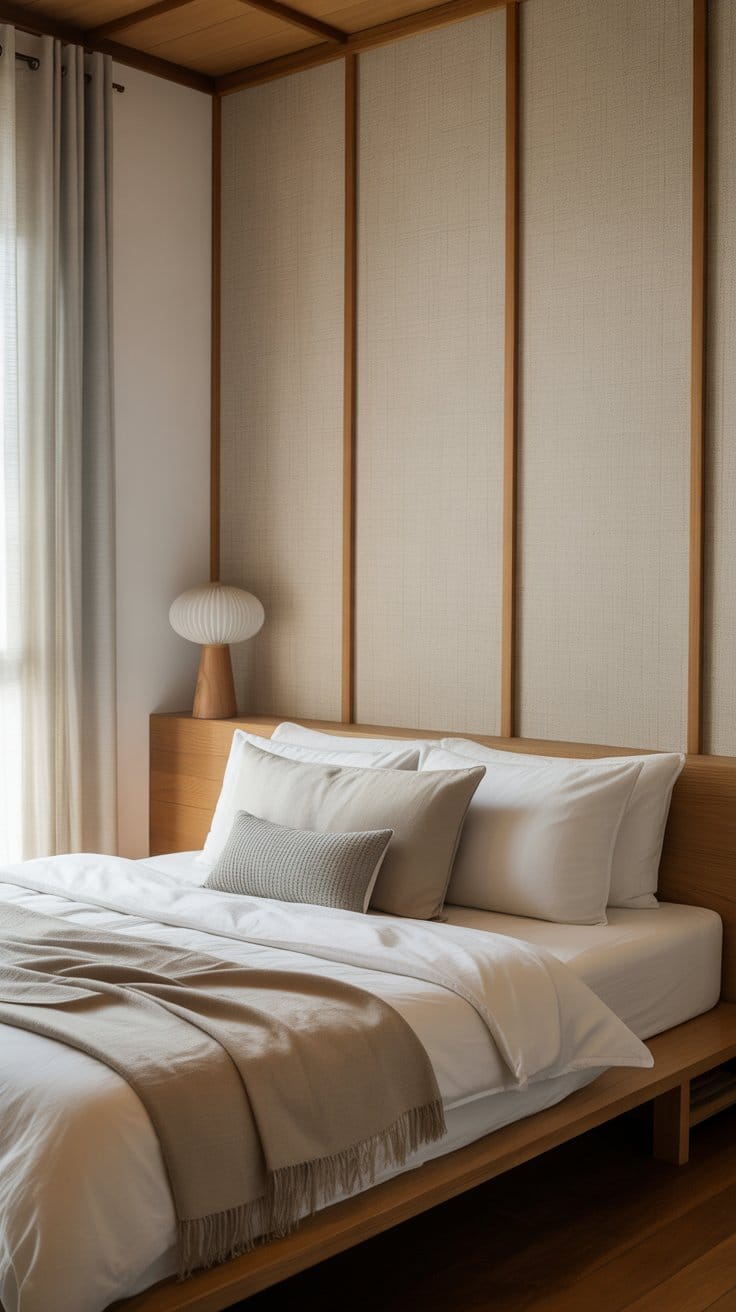
Soft curtains, floor cushions, or fabric wall panels add warmth without visual heaviness. Stick to breathable natural fibers that age gracefully.
Textiles are the gentle touch in Japanese bedroom design ideas, balancing the rawness of wood and the stillness of stone.
Use Hidden Storage
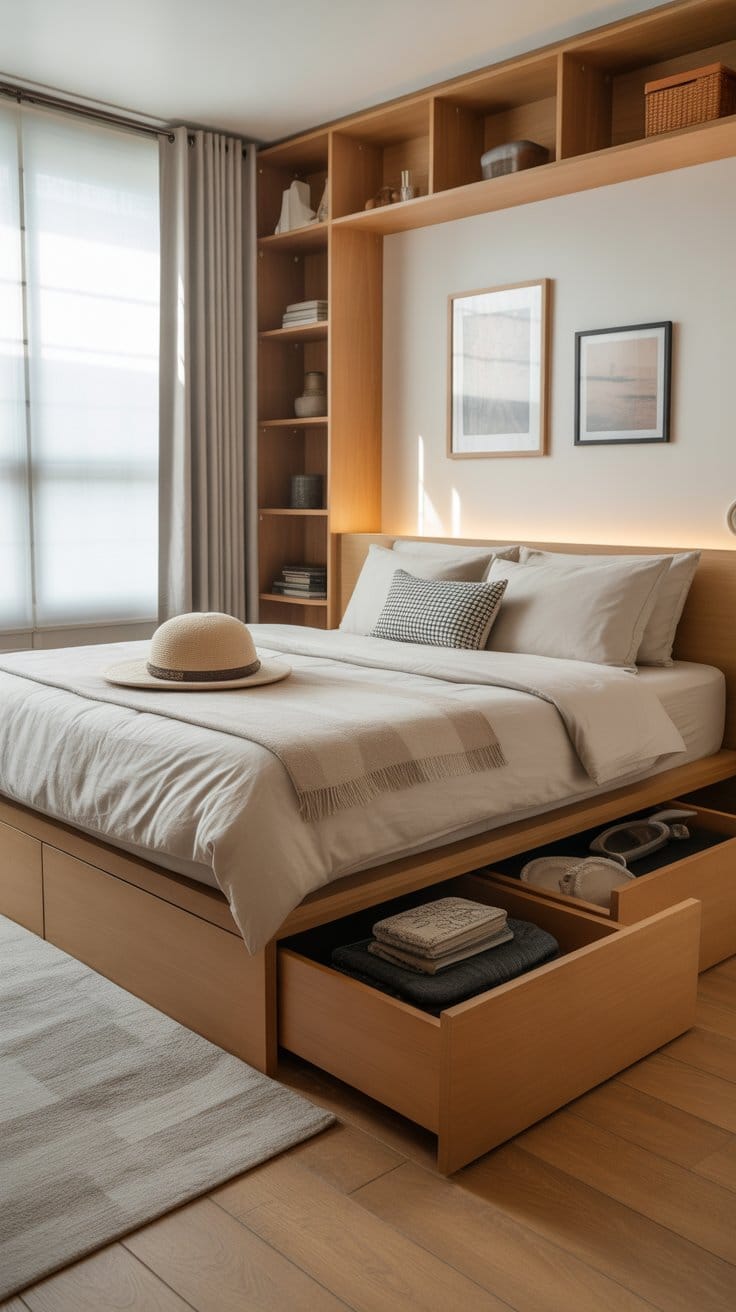
Hidden storage solutions help maintain minimalism. Under-bed drawers or built-in compartments keep the space neat without visible clutter.
Efficient organization is central to Japanese bedroom design ideas, where order leads to peace of mind and visual harmony.
Highlight Natural Light
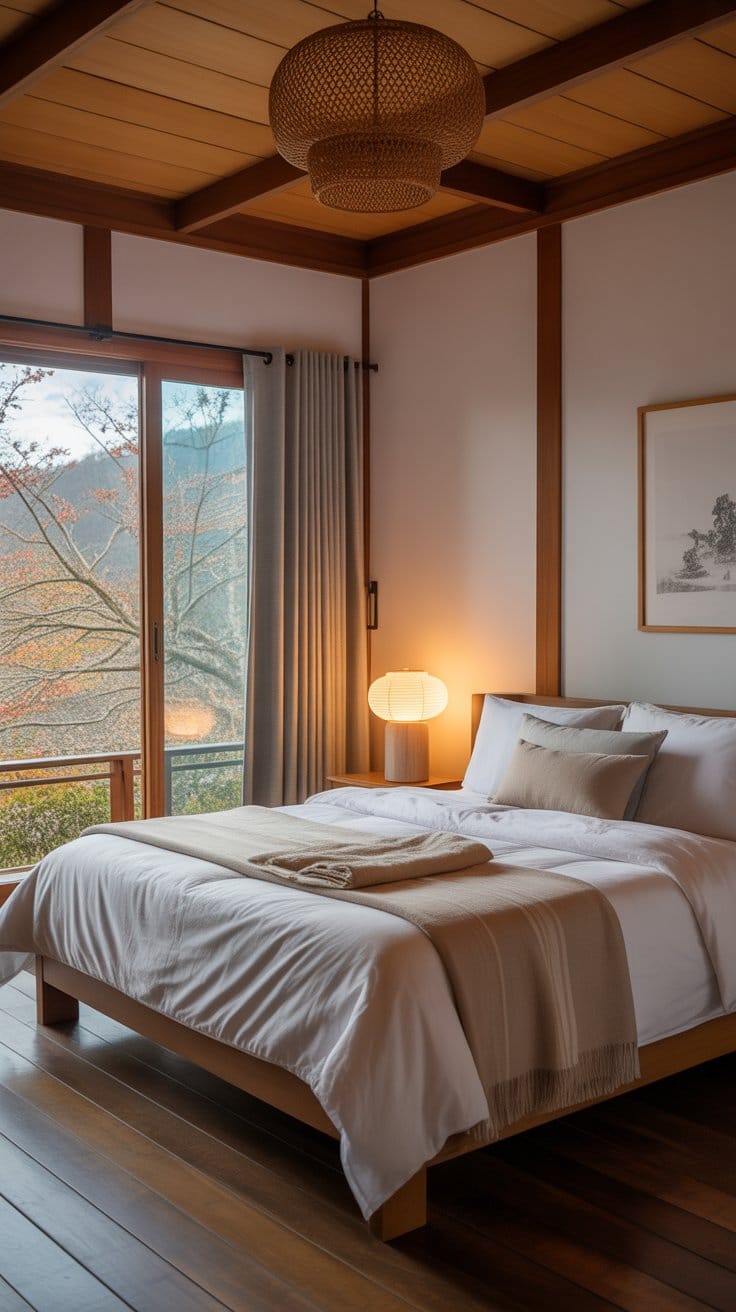
Allow daylight to fill your room by keeping windows unobstructed. Natural light brings vitality, while its shifting tones throughout the day create calm transitions.
In Japanese bedroom design ideas, light symbolizes purity — connecting the inner space to the flow of time and seasons.
Bring in Earthy Accents
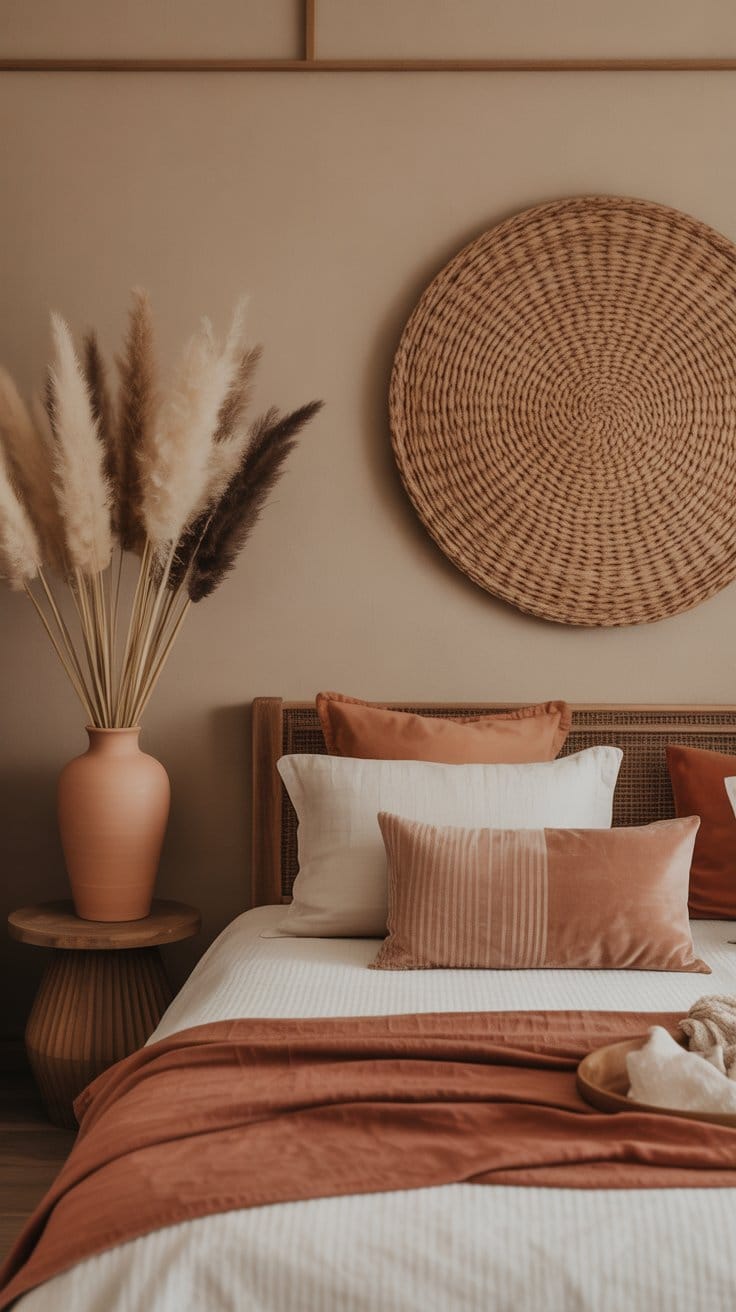
Add subtle earth tones — clay, muted terracotta, or sand — through pottery or decor items. These tones add depth and natural warmth without overpowering the calmness.
Earthy touches enrich Japanese bedroom design ideas, grounding the modern space in nature’s timeless palette.
Choose Authentic Accessories
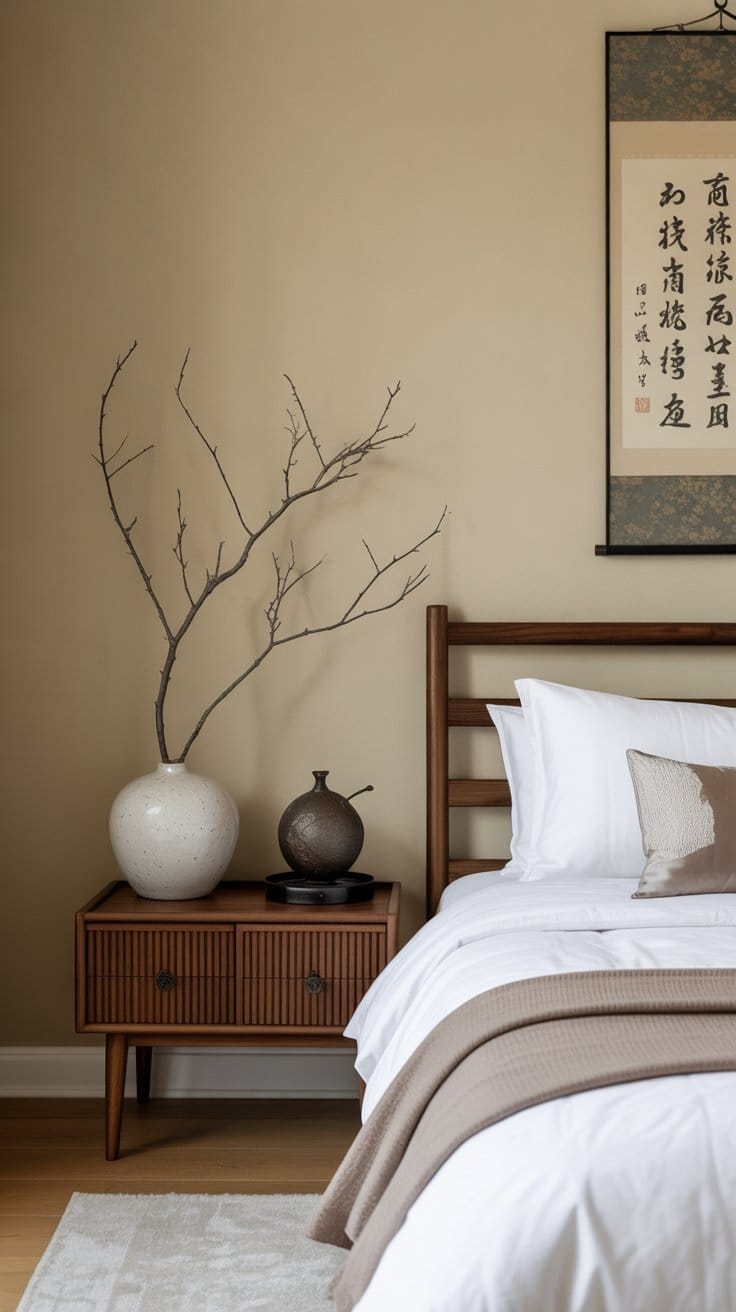
A simple vase with one branch, a handmade tea set, or a scroll with kanji calligraphy can become meaningful focal points. Every detail should be intentional and symbolic.
This mindful selection reflects the heart of Japanese bedroom design ideas, valuing quality over quantity.
Maintain Spatial Harmony
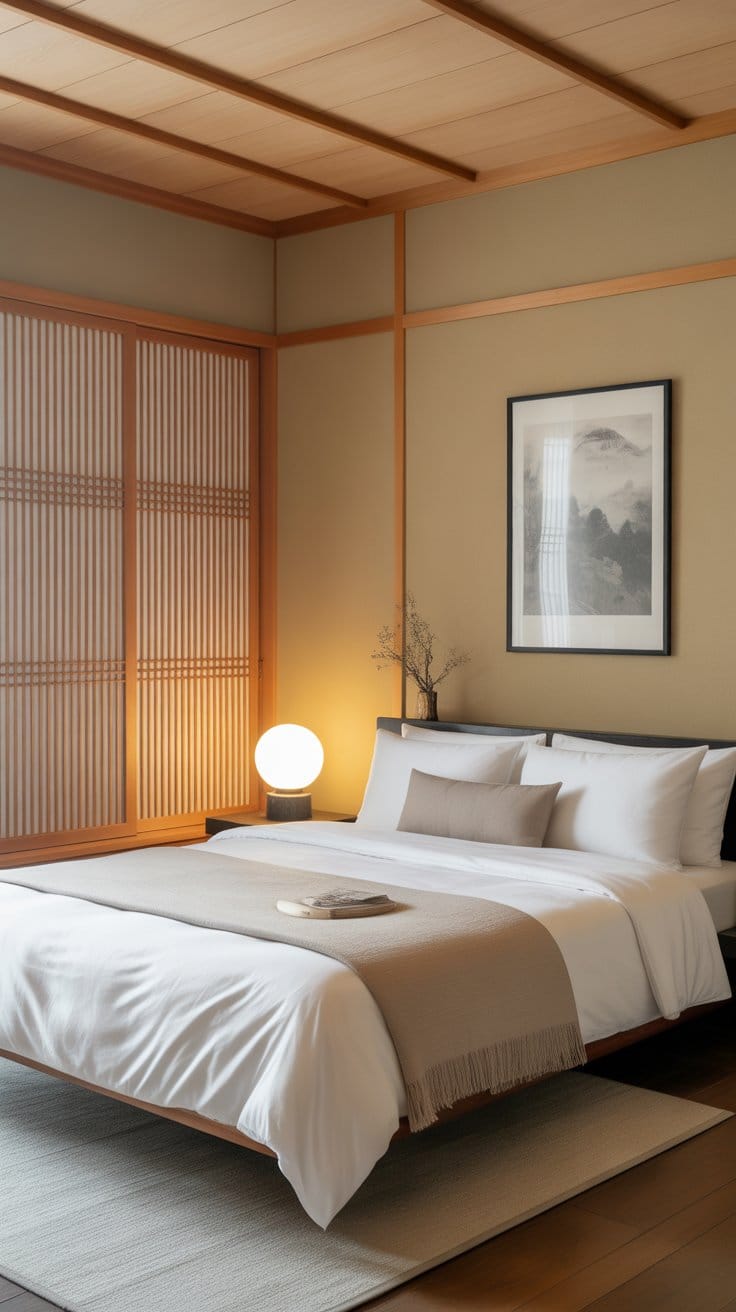
Leave negative space open — not every corner needs filling. Japanese design thrives on breathing space, allowing flow and serenity to emerge naturally.
The practice of ma, or space between things, defines Japanese bedroom design ideas. It teaches that emptiness itself holds beauty and peace.
Introduce Soft Shadows
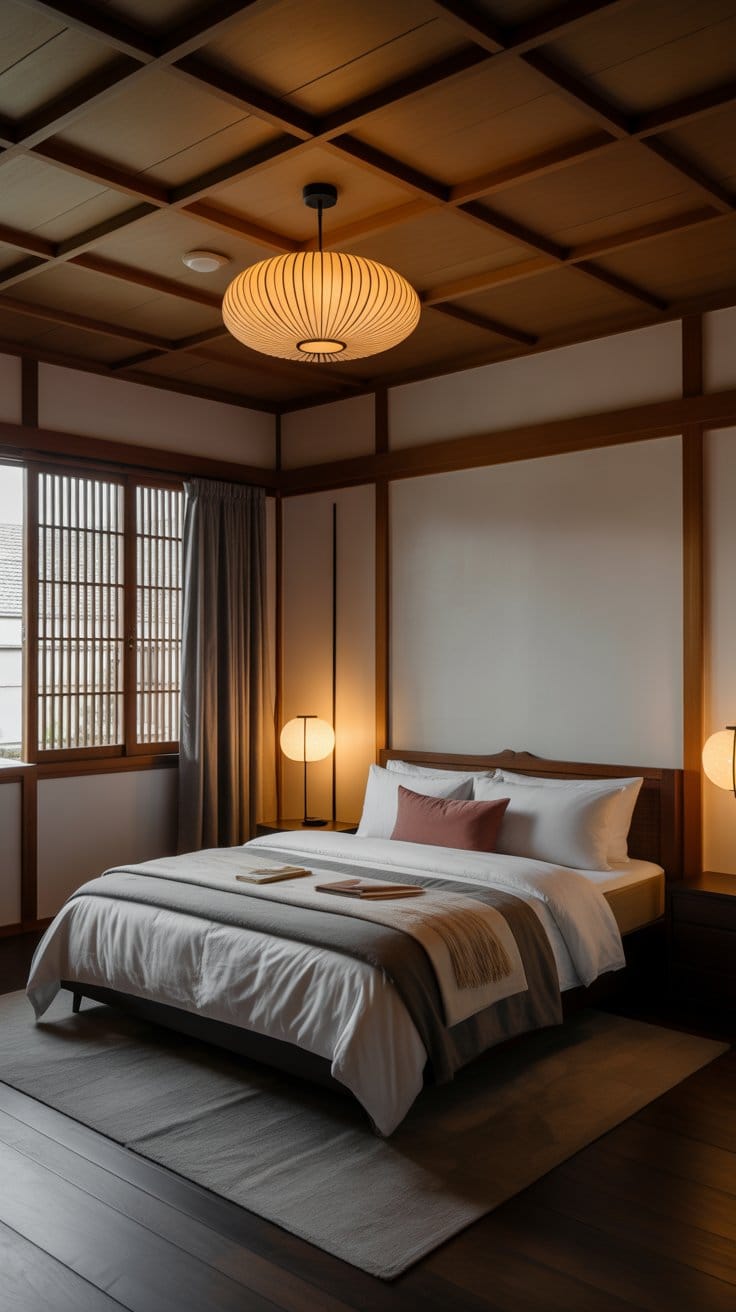
Rather than bright ceiling lights, rely on soft floor lamps and shaded sconces. Shadows create intimacy and a poetic sense of tranquility.
This gentle interplay of light and dark is at the soul of Japanese bedroom design ideas, evoking the quiet grace of traditional architecture.
Reflect Seasonal Changes
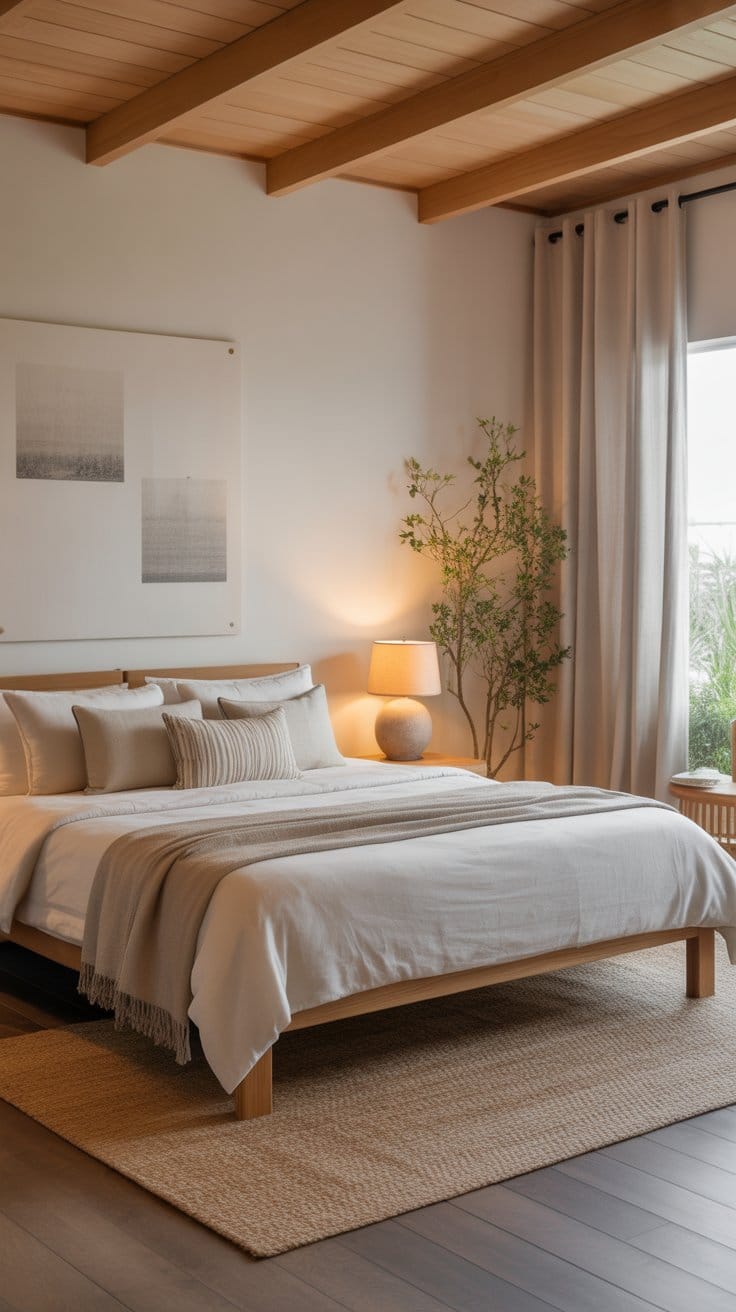
Change small decor elements with the seasons — lighter fabrics in summer, warm textures in winter. This adaptability honors nature’s rhythm and keeps the room feeling alive.
Seasonal mindfulness deepens your connection to Japanese bedroom design ideas, blending life, nature, and design in continuous harmony.
Conclusion
Japanese bedrooms are more than just living spaces — they are reflections of harmony, discipline, and respect for nature. By focusing on balance, simplicity, and intentional design, your room becomes a place of renewal and mindfulness. Natural materials, soft lighting, and minimal decor allow your senses to rest and your spirit to recharge.
Ultimately, Japanese bedroom design ideas remind us that true beauty lies not in excess, but in essence. By embracing stillness, natural textures, and thoughtful design, you create more than a bedroom — you create a sanctuary for calm, balance, and timeless peace.