 Small rooms aren’t the enemy. Your floor plan is. Most people think they need a bigger house when they really just need to stop fighting their four walls.
Honestly, I lived in a 100-square-foot “studio” for three years. I learned fast that every inch counts, and most of us are wasting space without even knowing it.
The Wall-Hugger Strategy: Why Center Beds Kill Small Rooms

Look, the “bed in the center” rule is for mansions. In a tiny bedroom, a centered bed creates two narrow, useless paths on either side. It’s a waste.
I pushed my queen mattress against the far wall and felt the room open up instantly. It felt wrong at first, but having floor space to actually move was a total game-changer for my daily flow.
Vertical Real Estate: Stop Looking Down, Start Looking Up

We tend to focus on what we can fit on the carpet. But your walls are a massive, untapped resource for storage and style. Empty walls are just missed opportunities.
Quick Tip: Install a floating shelf just below the ceiling line. I use mine for books and bulky items, which keeps the visual clutter way above my eye level and off the floor.
The Hidden Storage Goldmine Under Your Mattress

That dark space under your bed is prime real estate. If it’s just collecting dust bunnies, you’re doing it wrong. It’s the perfect spot for things you don’t need every single day.
I switched to a bed frame with built-in drawers last year. Because of that one change, I was able to get rid of a bulky dresser that was hogging half my room.
Mirrors Aren’t Just For Vanity—They’re Room Multipliers

A mirror is basically a fake window. It tricks your brain into seeing depth where there is only a flat wall. It’s the oldest trick in the book because it actually works.
Put a large mirror directly across from your main light source or window. My bedroom went from feeling like a cave to feeling like a suite just by bouncing that extra light around.
Why Your Giant Dresser Is Suffocating the Flow

I see this mistake in almost every small bedroom I visit. People buy these massive, six-drawer horizontal monsters and wonder why they are tripping over their own shoes. It is a literal roadblock. That hulking piece of wood eats your floor alive and stops your eyes from moving naturally across the room.
But here is the truth: you probably don’t need that much bulk. I swapped my wide dresser for a tall, narrow “lingerie” style chest last year and never looked back. It holds just as many sweaters but cleared enough floor space for me to actually move my legs in the morning.
The Magic of Leggy Furniture: Seeing the Floor Matters

Furniture that sits flush against the carpet is a total vibe killer in tight quarters. It creates a heavy, grounded visual that stops your gaze right at the base. When you can see the floor extending under a bed or a chair, your brain gets tricked. It thinks the room is bigger because the floor doesn’t “end” at the furniture line.
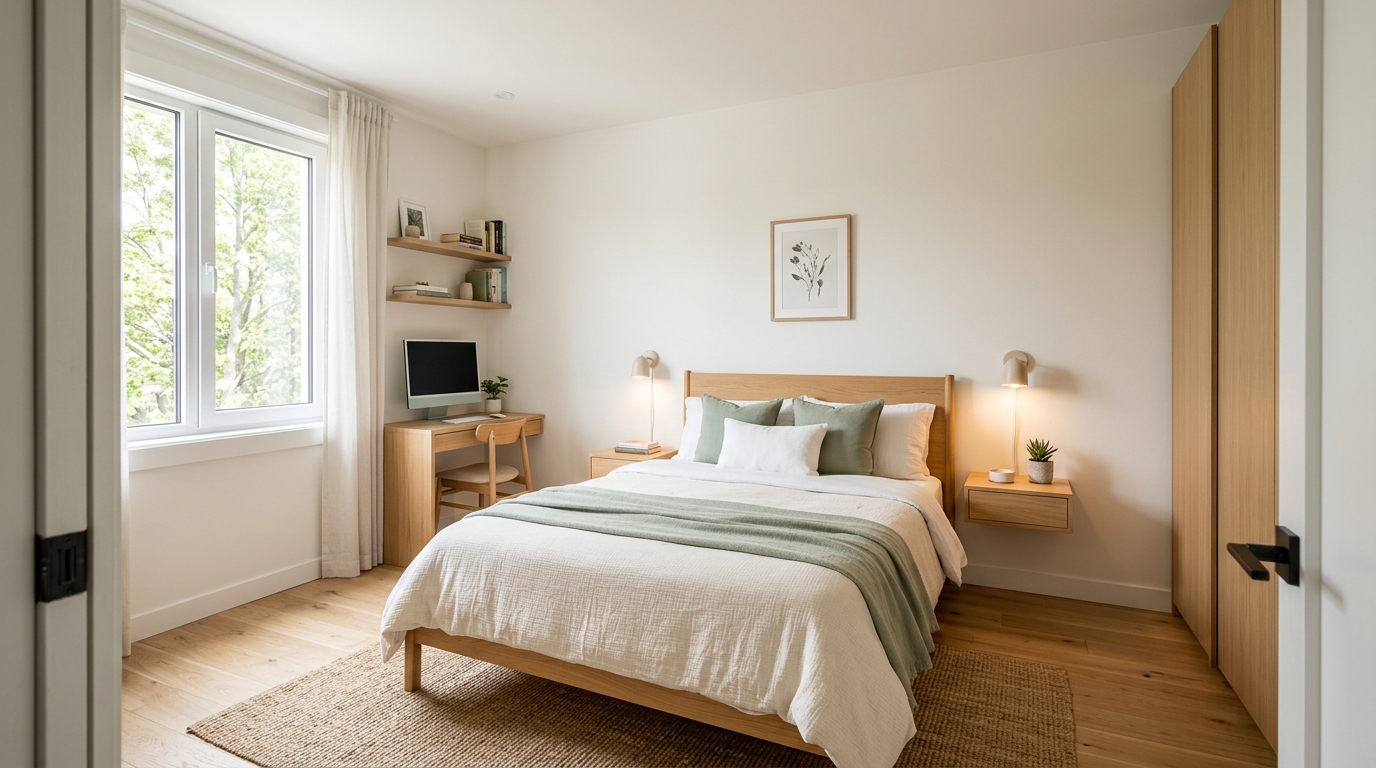
Look for pieces with tapered, slim legs. In my first studio, switching to a bed frame with eight-inch clearance made the wood floor feel continuous. Suddenly, the room stopped feeling like a cramped box and started feeling like a real living space.
Floating Nightstands: Reclaiming That Precious Footprint

Most nightstands are just boxes of wasted air sitting on your carpet. In a tiny room, every square inch of floor is prime real estate. If your bedside table has four chunky legs and a thick base, it is stealing your room’s breath. And for what? A lamp and a phone charger?
Go floating instead. I mounted a simple wooden shelf with a hidden drawer next to my mattress and it changed the entire energy of the corner. Because I can see the baseboard underneath the nightstand, the floor feels wide open. It is a small change with a massive visual payoff.
Curtains Above the Frame: The Tall Wall Illusion

Hanging curtains right at the window frame is a total rookie move. It chops your wall in half and makes your ceilings feel squat. You want to trick guests into thinking you have soaring ceilings even if you are living in a basement apartment.
And here is the secret: mount your rod just two inches below the ceiling line. I did this in my guest room and it is a total mind game. The fabric draws the eye all the way up, making the window feel twice as large as it actually is.
Lighting Beyond the Ceiling Fan: Layering for Depth

That single “boob light” in the center of your ceiling is doing you no favors. It casts harsh shadows and flattens the entire room into a depressing grey blur. Small rooms need layers to create depth. Without different light levels, the walls feel like they are closing in on you.
Use three light sources at different heights. I always tuck a warm floor lamp in a corner and put two small, dimmable lamps on the nightstands. It pushes the walls back visually when the sun goes down and makes the room feel cozy rather than cluttered.
The Rug Rule: Go Big or It’ll Look Like a Postage Stamp

Honestly, most people get this wrong. They buy a tiny 4×6 rug and center it, thinking it saves space. It doesn’t. It just looks like a floating postage stamp that chops the floor into pieces. You want a rug that tucks under the bed and extends past the sides. It anchors the room.
I once bought a cheap runner for my studio apartment. It looked pathetic. When I finally swapped it for an 8×10 that covered nearly the whole floor, the room suddenly felt twice as big.
Sliding Doors and Pocket Solutions: Reclaiming the Swing Zone

Door swings are the silent killers of a good floor plan. If your closet door hits your nightstand every time you open it, you’re losing usable square footage. Think about it. That “swing zone” is basically dead space you can’t put anything in. Sliding tracks or even a heavy curtain change everything.
My old bedroom had a door that smacked the bed frame. I got fed up and installed a simple sliding barn track. It felt like I’d gained five square feet of “living room” in a space that was already tiny.
Monochromatic Palettes: Blurring the Corner Lines

When you have high-contrast colors, your eyes stop at every corner. Dark walls with white trim make the room feel like a box. But when you paint the trim, walls, and even the ceiling the same shade? The boundaries disappear. It’s a trick of the light.
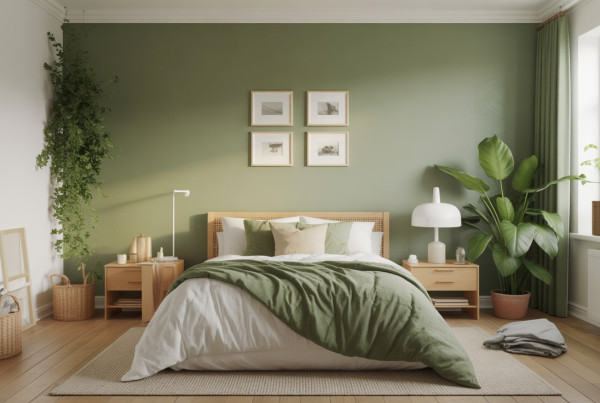
I tried this with a moody sage green in my guest room. By painting the baseboards the same color as the walls, the floor-to-wall transition became invisible. It felt infinite.
Multipurpose Zones: The Desk-Nightstand Hybrid

Stop trying to squeeze a dedicated desk and a nightstand into a six-foot gap. It’s cluttered. And it looks messy. Use one sturdy surface that does both. A small desk pulled right up to the bed works perfectly for your lamp and your laptop.
Look, I used a floating desk as my nightstand for three years. It gave me a workspace during the day and a spot for my water glass at night. Best layout decision I ever made.
Decluttering the Visual Noise: The ‘One-In, One-Out’ Habit

Physical clutter is visual noise. In a small room, one pile of laundry feels like a mountain. You have to be ruthless about what stays. If you bring in a new throw pillow, an old one has to go. It’s that simple.
I keep a small basket in my closet for “outgoing” items. Once it’s full, I head to the donation center. It keeps my surfaces clear and my brain much calmer.
The Scale Game: Picking One Statement Piece Over Ten Small Ones

Tiny furniture is a trap. Most people think filling a small room with doll-sized chairs and skinny nightstands helps. It doesn’t. It just makes the space look cluttered and frantic because your eyes have nowhere to rest. One large, high-quality bed or a substantial dresser creates a focal point that makes the room feel grounded and intentional.
I learned this the hard way in my first studio. I had five tiny IKEA tables that made the place look like a storage unit. I ditched them all for one beautiful, oversized velvet headboard. Honestly, the room felt twice as big instantly.
Common Mistakes to Avoid
Stop shoving every single stick of furniture against the walls. It creates this weird, empty “dead zone” in the middle of the floor that actually highlights how small the room is. Also, quit buying those massive, overstuffed recliners. If it looks like a marshmallow, it’s eating your floor plan alive.
Because I see this a lot: people hanging their curtain rods right at the window frame. Don’t do that. It chops the wall in half visually. Go high and wide.
Pro Tips
Swap your bulky bedside lamps for wall-mounted sconces. It’s a total game-changer for your nightstand real estate. You get more space for your book and coffee without the cord mess. And use “leggy” furniture. If you can see the floor underneath your bed or dresser, the room feels much airier.
My secret weapon is painting the baseboards the exact same color as the walls. It removes the visual “break” where the wall meets the floor. It tricks your brain into thinking the ceiling is a foot higher.
Conclusion
Small rooms aren’t a curse. They’re just a puzzle that requires a bit of editing. Stop fighting the square footage and start working with the sightlines. Focus on flow over storage.
Look, your bedroom should be a place to breathe, not a place to trip over shoes. Move the bed tonight. Try one of these tips. You’ll be surprised how much space you actually have.