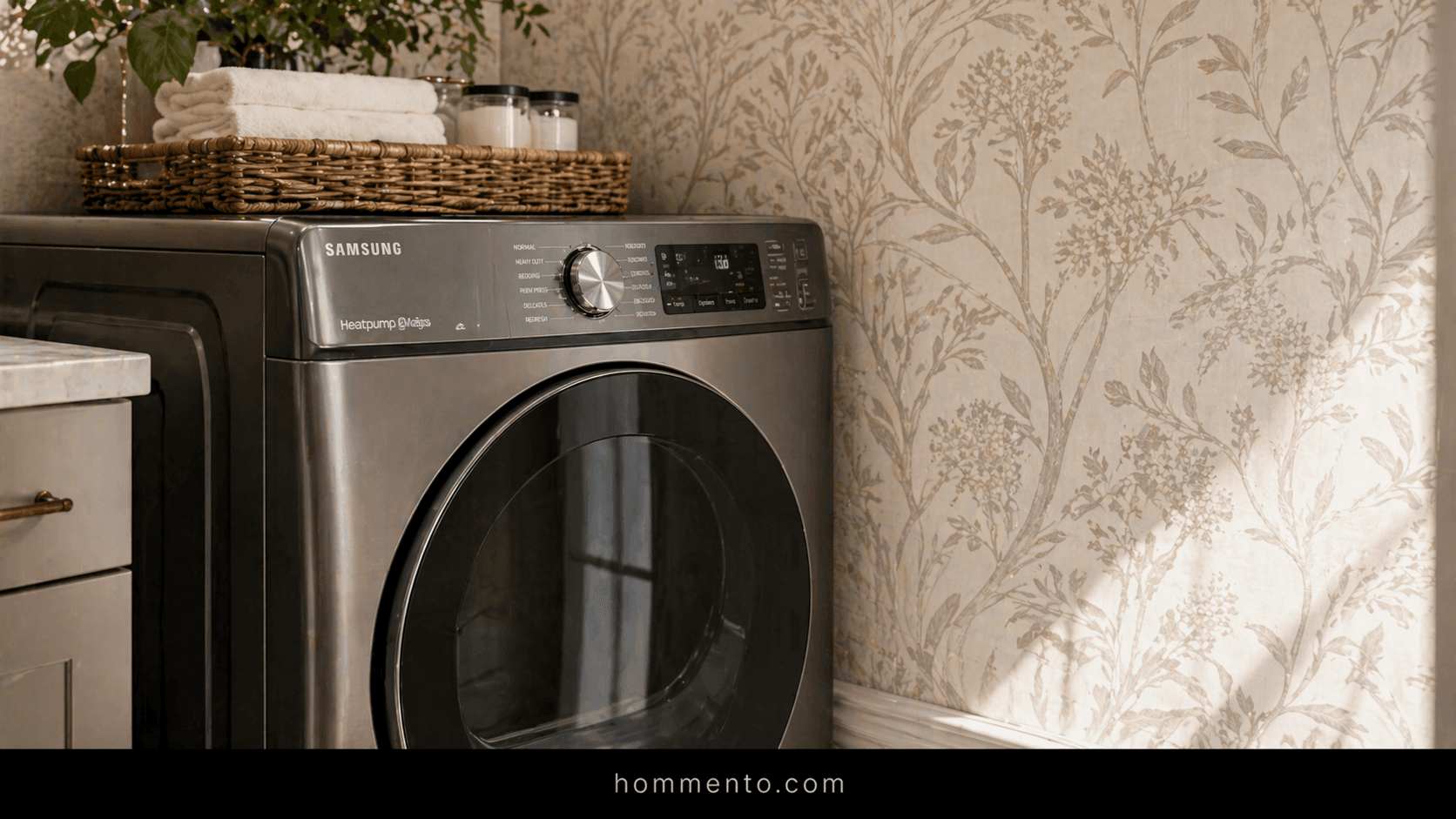
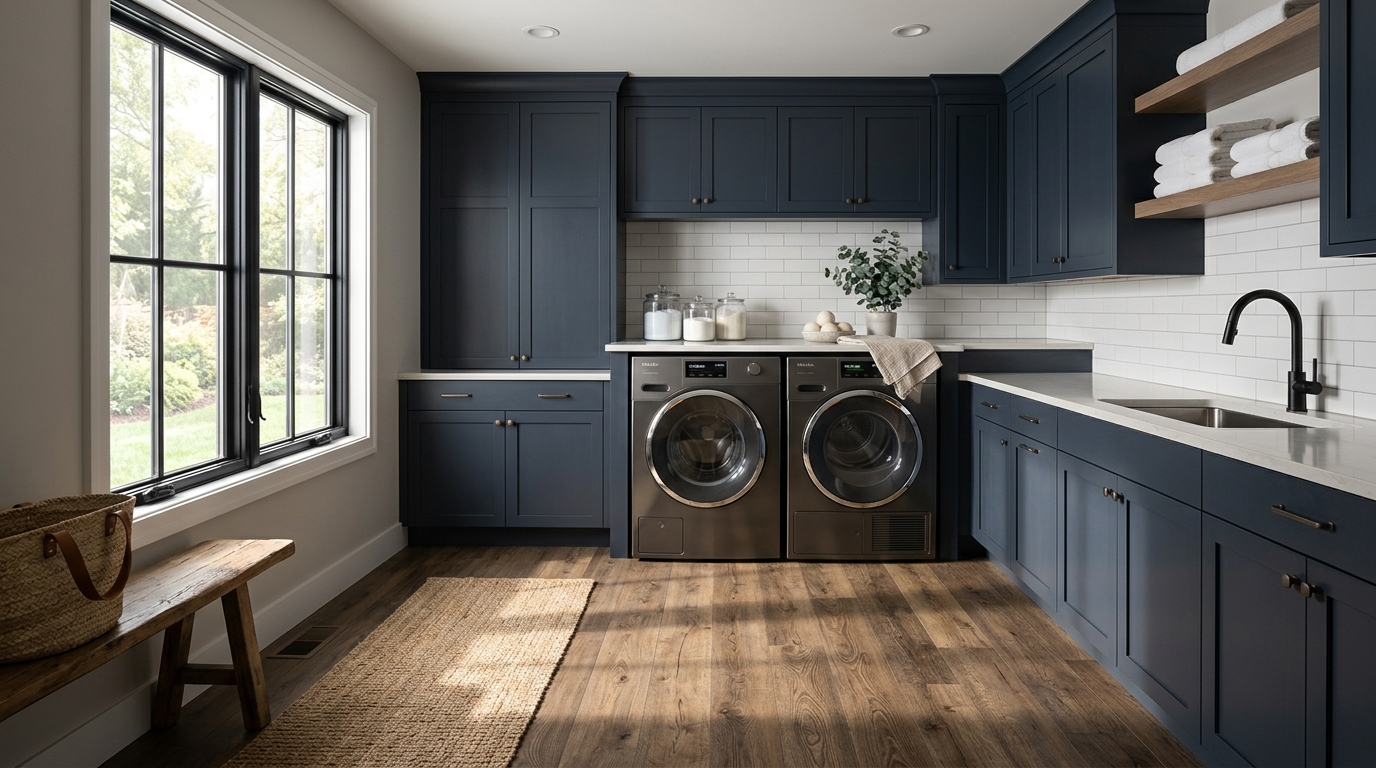
learned the hard way that water is a total jerk. My first laundry room had this “water-resistant” laminate that the contractor promised was fine. Fast forward six months—the drain hose popped out of the wall and dumped forty gallons of soapy mess everywhere. By the time I found it, the floor looked like a topographical map of the Andes. Everything warped.
Most people pick flooring because it looks “cute” on Pinterest. Big mistake. Your laundry room is basically a high-risk flood zone that happens to live inside your house. You need stuff that can sit under two inches of water for three hours while you’re out grabbing a taco and not turn into a soggy mess of sawdust and regret.
I’ve spent way too much money fixing these mistakes. Now, I only install floors that I can literally spray with a garden hose if I want to.
Why I swear by Luxury Vinyl Plank (LVP)

LVP saved my sanity. I put the 100% waterproof rigid core stuff in my current house two years ago and it’s been a dream. The “rigid core” part is what matters—it doesn’t show every tiny bump in the subfloor like the cheap floppy vinyl does. I went with a wood-look pattern that actually tricks my mother-in-law into thinking it’s real oak.
I literally dropped a full bucket of bleach water on it last month. I didn’t even panic. I just grabbed a towel, wiped it up, and went back to my Netflix binge. No swelling. No clicking sounds when I walk. Nothing.
If you buy the bottom-shelf stuff at the big box store, you’ll regret it when the edges start curling like a stale piece of ham. Spend the extra buck per square foot for a thick wear layer. Trust me.
Porcelain tile is basically bulletproof

This stuff is basically rock. If you want a floor that will outlive you and probably your kids, this is it. Porcelain is fired at higher temperatures than regular ceramic, so it’s way denser. It laughs at water. It doesn’t just resist moisture—it ignores it entirely.
I dropped an old-school heavy iron on my porcelain floor once. The iron shattered into three pieces. The tile? Not even a scratch.
It’s cold on your feet, though. If you’re fancy, put a heating mat underneath. If you aren’t fancy, just wear socks. It’s a laundry room, not a spa.
Sheet vinyl is cheap and works—seriously
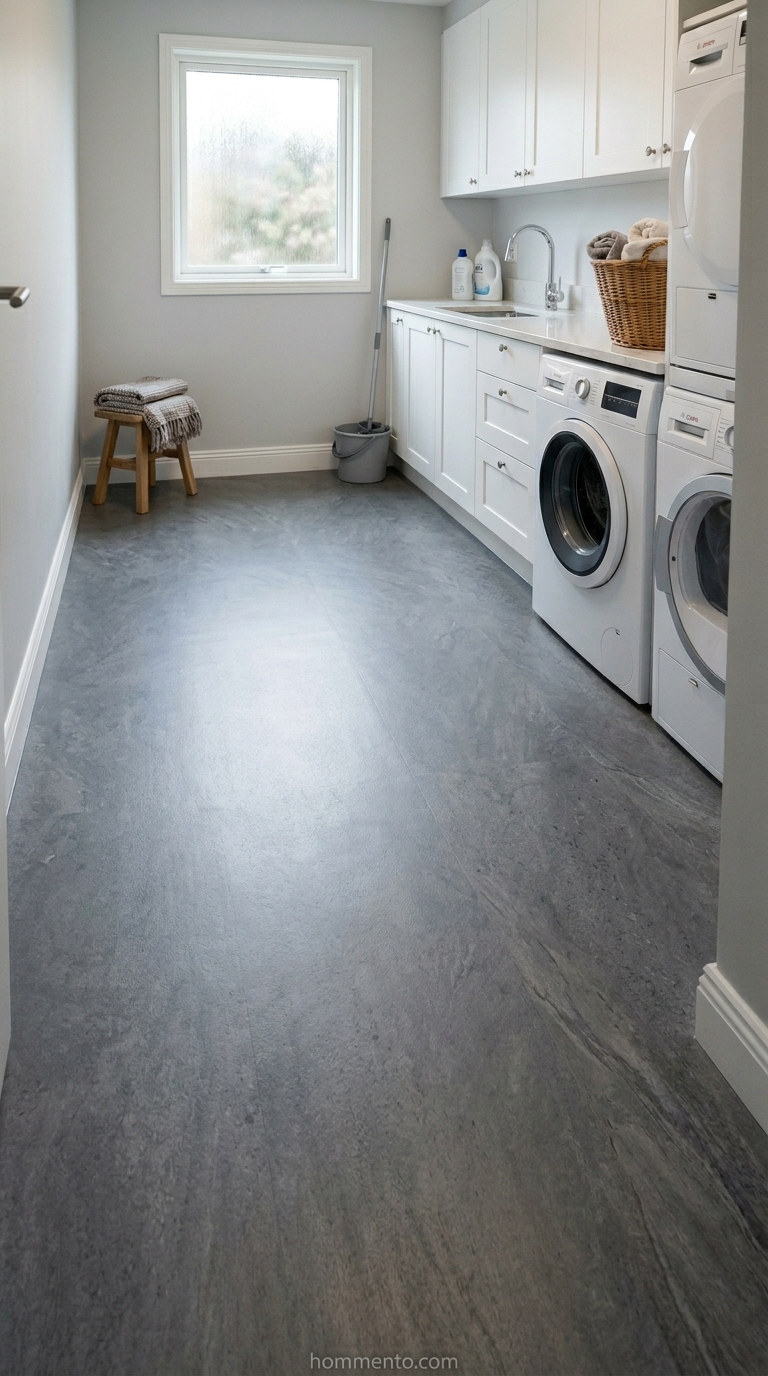
Stop being a flooring snob for a second. Sheet vinyl is not that yellowed, peeling crap from your grandma’s kitchen in 1984. Modern sheet vinyl looks decent, and more importantly, it has zero seams.
No seams means the water has nowhere to go. If your washer decides to puke all over the floor, the water just sits on top like a big, giant puddle. It can’t soak into the cracks because there aren’t any.
It’s the cheapest way to get real peace of mind. I used a grey slate-look sheet in a rental property and it still looks brand new after three different tenants tried their best to ruin it. It’s basically a giant plastic liner for your room.
Ceramic tile (if you can handle the grout cleaning)

Ceramic is the classic choice because it’s cheaper than porcelain and comes in every color under the sun. It’s great for floods. It won’t rot. But—and this is a huge but—the grout is where the nightmares live.
Grout is thirsty. It sucks up dirty laundry water and turns grey and gross in about six months. If you go this route, use a dark grout.
I used “Arctic White” grout in my first reno. Never again. Within a year, it was the color of a wet sidewalk because of all the lint and dog hair getting ground into it. Unless you want to scrub your floor with a toothbrush every Sunday morning, pick a “charcoal” or “driftwood” color and save yourself the headache.
Polished concrete looks cool and survives floods

If you’re on a slab, just rip up the old carpet or linoleum and polish the gray stuff underneath. It looks like a fancy coffee shop but handles a leaking hose like a champ. Nothing to rot. Nothing to warp.
I saw a washer hose pop once and dump fifty gallons on a polished concrete floor. The owner just squeegeed the mess out the back door and went to lunch. It’s cold on the bare feet—grab a rug—but it’s basically immortal.
Seriously. You can’t kill it.
Natural stone—if you want to spend a fortune

My neighbor put slate in her laundry room because she wanted that “mountain cabin” vibe. Huge mistake. Every time she drops a cap of bleach, she panics about the finish getting eaten away.
It’s pricey to buy and even pricier to keep up. You have to seal it every single year or the grout gets gross and the stone sucks up dirty water. If you have money to burn, go for it, but I’d rather spend that cash on a better dryer.
Why I tried rubber flooring (and why it’s awesome)

Look, it looks like a CrossFit gym. I get it. But those interlocking rubber tiles are a dream for old washers that like to “dance” across the room during the spin cycle. It swallows the noise.
Plus, standing on rubber while folding three loads of heavy jeans won’t kill your lower back. I dropped a heavy iron on my rubber floor last week. It just bounced. No cracks, no drama.
It’s ugly-cool.
Waterproof laminate actually works now

I used to hate this stuff with a passion. Then I saw a sample of the new “waterproof” stuff sit in a bucket of water for three days without swelling an inch. Brands are finally figuring out how to seal the edges so the core doesn’t turn into a sponge.
You get the wood look without the “oh crap” anxiety every time the machine clicks over to the fill cycle. Just make sure the box actually says “waterproof” and not “water-resistant”—there is a massive difference when a pipe bursts.
Why regular laminate is a total disaster here

Cheap, old-school laminate is just compressed sawdust and hope. One tiny leak from the detergent cup and the edges will curl up like a stale potato chip. I’ve ripped out enough “bubbled” floors in laundry rooms to know this is a hard pass.
Seriously, don’t do it.
The core of that stuff is basically cardboard. Once it gets wet, it stays wet, and then you’ve got a mold party happening under your feet that you won’t see until it’s too late. Saving fifty bucks on the flooring now will cost you thousands when the subfloor rots out later.
Your subfloor is probably rotting—check it
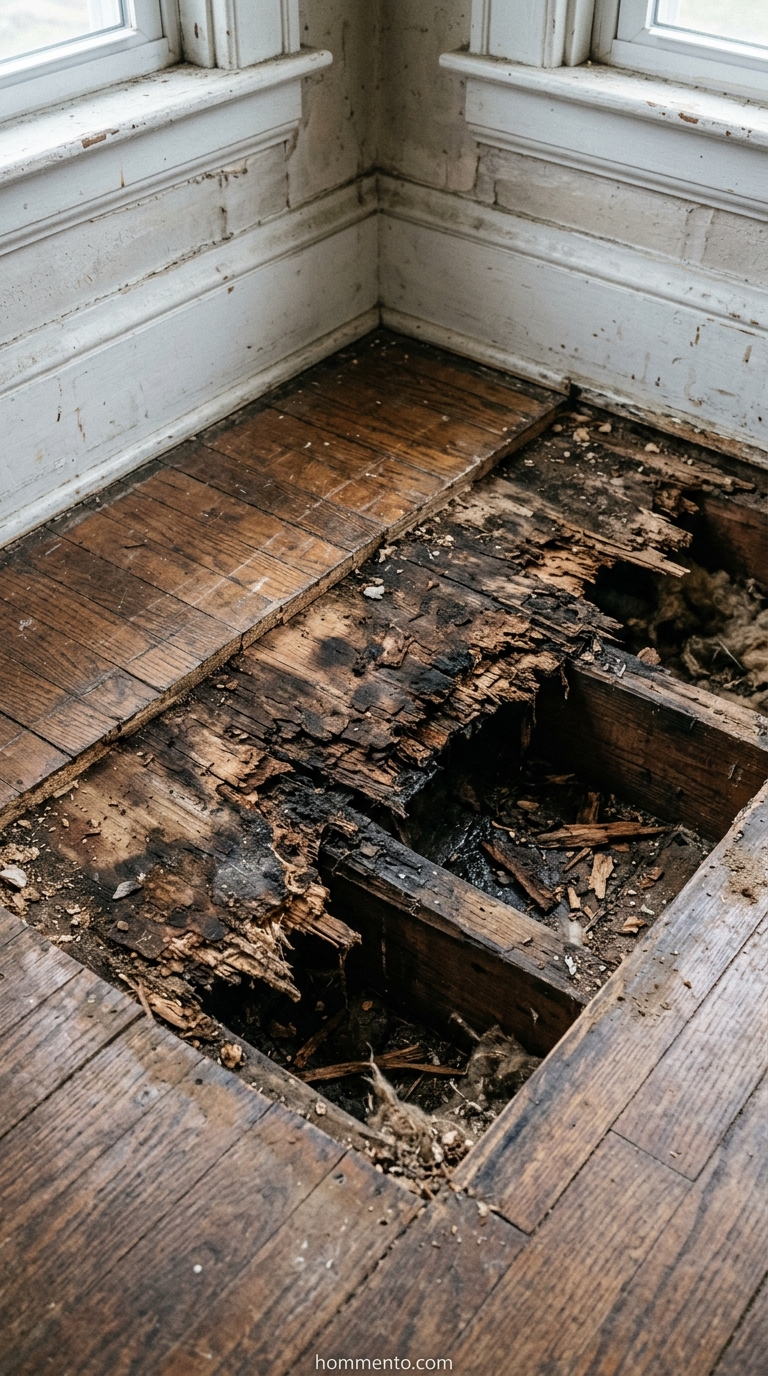
I didn’t realize my subfloor was basically oatmeal until I stepped near the washer and felt a weird “squish.” If your floor feels bouncy, stop everything. Rip a corner of that old vinyl up and poke the wood with a screwdriver.
If it goes in like butter? You’re screwed.
Spend the money to fix the plywood now because no amount of fancy tile will save a floor that’s literally decomposing underneath you. I’ve seen people try to “floor over” rot and it just ends with a washer falling through the ceiling into the kitchen below—no joke.
Put a floor drain in if you can swing it
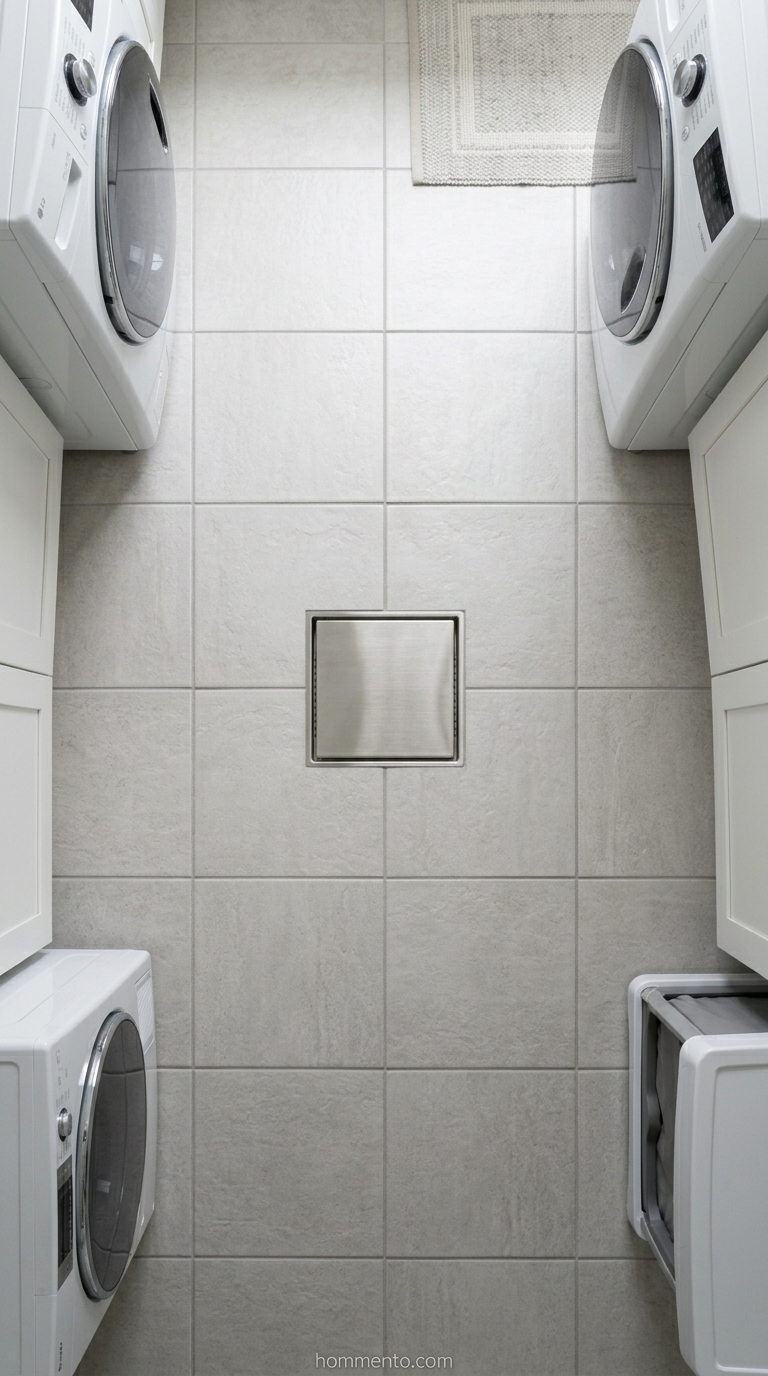
Look, plumbing is expensive and cutting into your slab or joists sucks. But have you ever seen what happens when a $10 rubber hose snaps while you’re at work? It’s a literal indoor swimming pool.
If you’re already ripping up the floor, just ask the plumber for a quote on a floor drain. It’s the ultimate “oops” insurance policy for your house.
Seriously. Just do it.
Silicone caulk is your best friend for baseboards

Standard white caulk is garbage for this—use the 100% silicone stuff that smells like vinegar. I run a fat bead right where the baseboard meets the new floor to create a “waterproof tub” effect.
If the washer leaks, the water stays on the floor where I can mop it up instead of seeping behind the drywall and growing a mold colony. Trust me on this one—drywall is like a sponge for gross laundry water and once it gets wet, you’re ripping out the whole wall.
It looks a bit messy if you aren’t good with a caulk gun, but who cares? It’s a laundry room, not a museum.
My bucket test for flooring samples

The guy at the flooring store will swear on his life that his “water-resistant” laminate is basically a submarine. He’s lying. I take every sample home and chuck it into a 5-gallon bucket of water for a full weekend.
If the edges swell even a tiny bit, I toss it in the trash.
It’s a brutal test, but I’d rather kill a $2 sample than find out my $2,000 floor hates water after the first spill. Most of those “waterproof” clicks-together planks fail at the seams because the core isn’t actually plastic.
Dealing with the noise (vibration pads matter)

My front-loader used to “walk” across the room during the spin cycle like it was trying to escape. It sounded like a helicopter landing in my kitchen.
Get those thick rubber anti-vibration pads—the ones that look like giant hockey pucks—and stick them under the feet. They’re cheap.
Plus, they stop the washer from grinding your expensive new tile into dust every time you wash a load of heavy towels. If you have a second-floor laundry, these aren’t optional; they’re the only thing keeping your sanity intact when the spin cycle starts.
Choosing colors that hide lint and dog hair

Don’t buy black tile. Just don’t. I made that mistake in my first house because I thought it looked “edgy” and modern. Total nightmare. Every single speck of white dryer lint looked like a glowing beacon on that dark floor. I felt like I was sweeping every twenty minutes just to keep my sanity.
If you have a dog like my lab, Cooper, who sheds enough to build a second dog every week, go with a mid-tone. Think “oatmeal” or a weathered oak look. These shades are basically camouflage for hair and dust bunnies.
Patterned floors—like those funky encaustic tiles—are also great for hiding the mess. The busy design tricks your eyes. You won’t see the dirt until you actually go to mop it up. Which is exactly how I like to live my life.
Common Mistakes to Avoid

The biggest screw-up I see? People forget to seal the edges. They buy “waterproof” flooring but leave a gap between the floor and the wall. Then the washer leaks, water slides right under the baseboard, and your subfloor starts rotting anyway.
It’s gross. It smells like a damp basement forever.
Also, skipping the floor leveler is a recipe for disaster. If your floor has even a tiny dip, your washer is going to vibrate like a freight train during the spin cycle. I’ve seen machines literally “walk” across the room because the floor wasn’t flat. It’s loud, it’s annoying, and it’ll eventually crack your floor joints.
Pro Tips
Buy a plastic drain pan. They cost like twenty bucks at the big box stores. Slide it under the washer before you hook up the hoses. It’s the cheapest insurance policy you’ll ever buy. If a small leak starts, the pan catches it before it touches your pretty new LVP.
Keep an extra box of your flooring in the back of a closet. Seriously. Products get discontinued all the time. If you have a massive pipe burst in three years and need to replace five planks, you’ll be glad you aren’t trying to hunt down a matching shade on eBay.
I always use a high-grade silicone caulk around the entire perimeter of the room. It’s an extra step that takes maybe twenty minutes. But it keeps the water on top of the floor where you can actually see it and wipe it up.
Conclusion
Laundry rooms are basically ticking time bombs for water damage. You don’t need to spend ten thousand dollars, but you do need to be smart. Pick something that can handle a flood and doesn’t make you want to cry when you see a little dog hair.
I’m sticking with my waterproof LVP for my next project. It’s cheap, it looks decent, and I can install it myself on a Saturday morning. Stop overthinking it and just get something that won’t turn into a sponge the second your washer acts up.